There is much agreement that urban security dispositives acquired new qualities in recent years. But do the dominant diagnoses hold up to detailed empirical verification? This piece in International Political Sociology re-engages the pertinent security studies literature. In the age of globalisation and urbanisation, technological innovation and liberal policy ideals, how are urban security apparatuses reorganised, and in what relations do they stand to local societal and political orders? Describing the evolving security handling of three urban spaces – a site of mobility (HB Zürich), a public square (Bundesplatz Bern) and a place of mass commerce (St. Jakob Park Basel) –, the article makes the case for more nuanced engagements with urban security ensembles, their technological evolution, relations with democratic ideals, globalisation and de-territorialisation both in and beyond Western polities.
Securing public space in Switzerland – Bundesplatz Bern 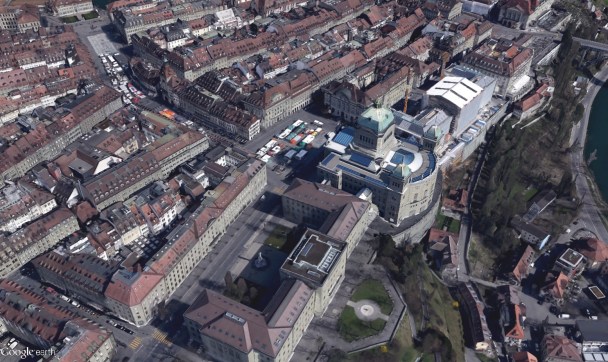
Hagmann, Jonas (2017). Security in the society of control: The politics and practices of securing urban spaces. International Political Sociology 11(4): 418-448. PDF
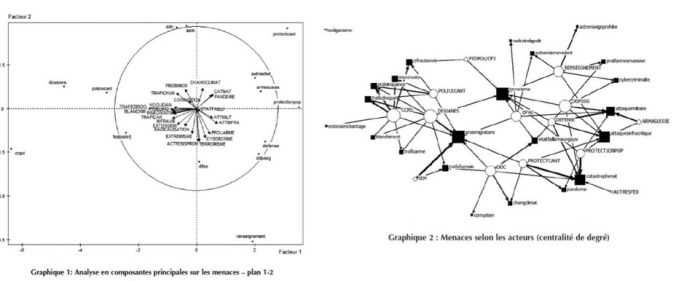
 Depuis la naissance de la Suisse moderne en 1848, sécurité a constamment rimé avec neutralité. De nos jours, cette dernière reste encore perçue par une large majorité de Suisses comme une garantie de protection face aux tumultes du monde. Cependant, dans la pratique, cette singularité est remise en question. Notre article dans Questions internationales démontre que dans un monde interdépendant, l’impératif de coopération, indispensable pour gérer les menaces avant tout globales et transnationales, s’accompagne d’une discrète mais profonde transformation du paysage sécuritaire du pays situé au cœur de l’Europe.