CfA – ISTP Spring School 2018: “Governing and living with urban (in-)security in Cape Town townships”

Jennifer Duyne Barenstein and I are organizing an ISTP Spring School in Cape Town on urban security practices/instruments in low-income neighborhoods. The program covers two weeks, starting 29 January 2018, and is open to ETH Zürich PhD and MA students. It includes lectures on Southern Urbanism, socio-spatial exclusion and everyday security politics. It also entails participation in a UCT urban studies conference, training in fieldwork methodology and on-site research. Deadline for applications is 10 December.

Cape Town Spring School ISTP ETHZ.jpg

ETH Zürich social media news stream on Ambizione research in Kathmandu

ETH Zürich covers my ongoing fieldwork on urban security management in Kathmandu, Nepal, in a social media news stream. For more information and audio-visual material see ETH ISTP’s homepage, facebook or twitter account.

ISTP urban security research KTM

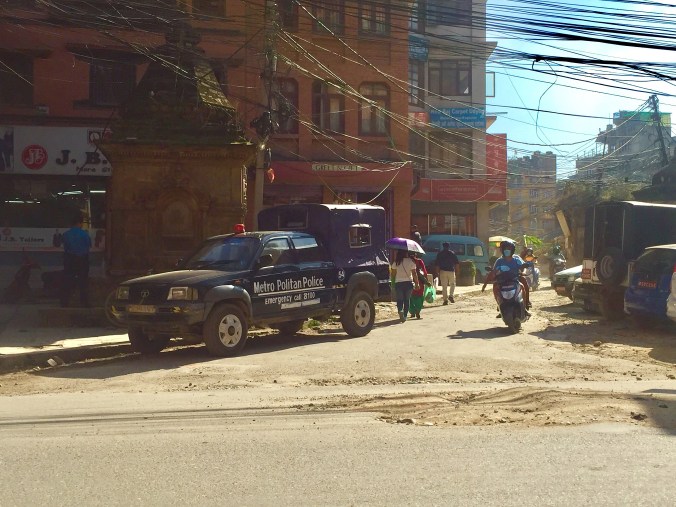
Urban police unit, Metro Kathmandu

Citizen interview, Old Bus Park

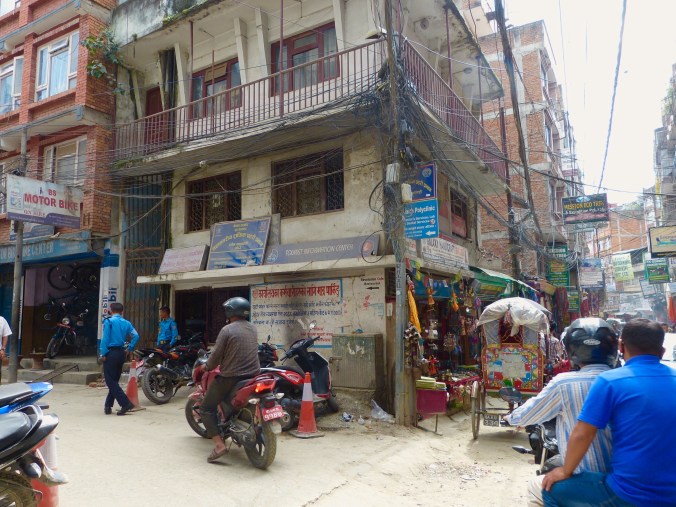
Thamel police information postThamel Police Station

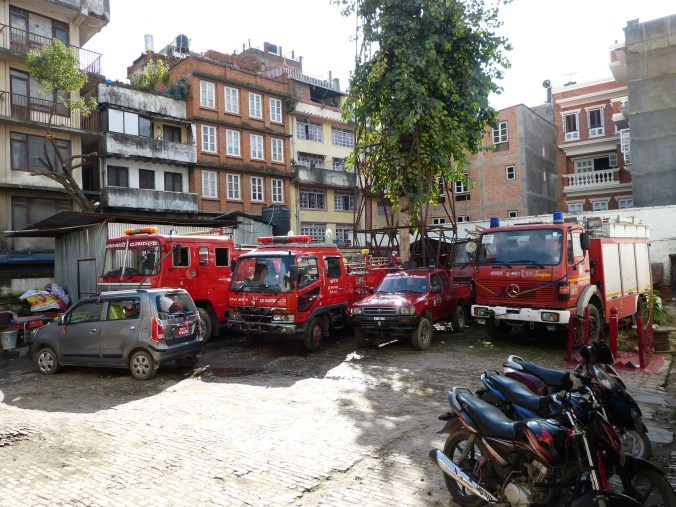
Juddah Fire Brigade KTMJuddha Barun Yantra Karyalaya (Kathmandu’s only fire station)

Research stay at Kathmandu School of Law in fall 2017

From 1 September 2017 – 30 November 2017, I will be a Visiting Faculty at the Kathmandu School of Law’s Research Department . The research stay serves to connect to local urban and security studies specialists, and to conduct field research on the reconfiguration of urban security management in different sub-city laboratories, the Gongabu New Bus Park, the Basantapur Durbar Square, Thamel, and the Lajimpat residential area.

KLS

Le Temps: Ce que signifie concrètement la politique de sécurité Suisse 

La politique Suisse de sécurité ne se résume pas à ceux qui en écrivent ses rapports. Une analyse du travail au quotidien de ses acteurs, au contact avec les défis sécuritaires de notre temps, permet de brosser le tableau d’un univers de plus en plus interconnecté et en pleine expansion. Un projet de recherche financé par le Fonds national pour la recherche scientifique (FNS) montre qu’en effet, les questions migratoires et de terrorisme constituent aujourd’hui le centre de gravité de la sécurité Suisse, et que ceci fait basculer le champ professionnel et institutionnel vers la gestion de menaces transnationales.

Davidshofer, Stephan; Tawfik, Amal; Wenger, Andreas; Hagmann, Jonas; Wildi, Lisa (2016). Ce que signifie concrètement la politique de sécurité Suisse. Le Temps, 20 December: 10. PDF

NZZ Artikel über die Bedrohungsarbeit, nationale und internationale Vernetzung der Sicherheitsbehörden

Ein Forschungsprojekt liefert erstmals umfassende Einblicke in die Schweizer Sicherheitspolitik, wie sie tagtäglich von Praktikern umgesetzt wird. Wer arbeitet heute mit wem wie intensiv zusammen – und zu welchen Gefahren? Die empirische Momentaufnahme zeigt auf, wie sich das sicherheitspolitische Gesamtsystem vom klassischen Fall der militärischen Landesverteidigung entfernte und heute stark auf Gefahren der globalen Mobilität – Migration und Terrorismus insbesondere – fokussiert. Diese Neuausrichtung wird von neuen landesweiten und grenzübergreifenden Kooperationspraktiken begleitet. Dabei zeigt sich im Bereich der inneren Sicherheit eine besonders ausgeprägte Internationalisierung der Sicherheitsarbeit sowohl von Bund als auch Kantonen. Gleichzeitig wandeln sich die Berufsprofile und Karrierewege der im Politikfeld tätigen Praktiker. Internationale Erfahrungen, akademische Ausbildung, militärische Grade und weitere Kompetenzen werden von verschiedenen Teilbereichen des Arbeitsbereichs neu bewertet.

Hagmann, Jonas; Wenger, Andreas; Wildi, Lisa; Davidshofer, Stephan; Tawfik, Amal (2016). Sicherheit als Verbundaufgabe: Veränderte Bedrohungsszenarien stellen den Bund und die Kantone vor grosse Herausforderungen. Neue Zürcher Zeitung 248, 24 October: 12. PDF

C&C piece on the measurement of national security fields (out now)

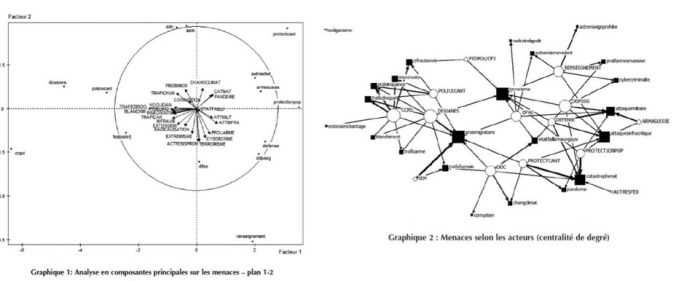
The emergence of a transnational field of security in Europe constitutes a stimulating new observation to security studies research. However, the operationalization of such research is challenging. Notably, time-consuming data collection and data analysis is required to fully comprehend the complex characteristics and resources of a security field’s manifold actors. Drawing on a research project funded by the Swiss National Science Foundation (SNSF), this article offers a substantive analysis of the contemporary dynamics of the Swiss national security field, and it presents some practical ‘tools’ for researchers interested in producing empirical studies of transnational fields of security in Europe. To do so, the article mobilises multiple correspondence analysis, principal component analysis, network analysis and other statistical or statistics-based methods to assess the europeanisation of the Swiss security field.

CC_methods

Davidshofer, Stephan; Tawfik, Amal; Hagmann, Jonas (2016). Analyse du champ de la sécurité en Suisse : vers une hypertrophie de la sécurité intérieure et autres réflexions méthodologiques. Cultures & Conflits 102 (2016/2): 59-93. PDF

Research stay at Faculté des Sciences Juridiques, Economiques et Sociales, Université de Marrakech

From 1 November 2016 – 30 January 2017, I will be a Visiting Scholar at the Groupe de Recherche sur la Stratégie et la Sécurité, Faculté des Sciences Juridiques, Economiques et Sociales, Université de Marrakech. The research stay serves to connect to local urban and security studies specialists, and to conduct field research on the reconfiguration of urban security management in different sub-city laboratories, the Souks des Ferblantiers, the Place Djemaa el-Fna, the Gare Routière, and the Quartier de Guéliz.

Pro Helvetia/Swiss Arts Council mandate: How to secure a country

Since winter 2015, I am counselling a Pro Helvetia Förderprojekt in visual arts. The project is developed by photographer Salvatore Vitale, and seeks to capture practices of contemporary national security management in Switzerland. Under the title How to secure a country, he visualises standard operating procedures of national danger management broadly defined – the control of borders, people, goods, urban spaces, mobility and so on. By focusing on manuals for professional security production, and their practical implementation in the field, he lends attention to – and displays in new ways – the difficult and bureaucratic rationalisation of the fluid thing termed ‘(in-)security’.

howtosecureacountry

For more information and early results of this project, visit Salvatore Vitale’s website or read his interview for American Suburb X.


Research stay at Centre for Urban Conflicts Research, University of Cambridge

From 15 August – 30 October 2016, I will be a Visiting Scholar at the Centre for Urban Conflicts Research, Department of Architecture and Urban Studies, University of Cambridge. One goal of this stay is to connect to local urban and security studies specialists, and to refine the analytical framework of my ongoing SNSF Ambizione enquiry into the global politics and practices of urban protection. Another aim is to design a collaborative research project with Dr Wendy Pullan on the politics of memorializing genocide in the City of Kigali, an upcoming case study city.

Recruitment: Research Assistant in Political Science/Urban Studies

In support of my SNSF research grant on the politics and practices of urban protection in the Global South, I am looking for a Research Assistant in Political Science/Urban Studies, to be based at ETH Zürich’s new Institute of Science, Technology and Policy. The candidate should have a BA degree in social science (International Relations, political science, sociology or other), urban studies or urban planning. Her/his main tasks include the production of literature reviews on urban politics, security dispositives and transnational networks, as well as desk-based research on city case studies in Morocco, Nepal, and Rwanda. Click here for further information about the recruitment. Deadline for applications is 25 February 2016.