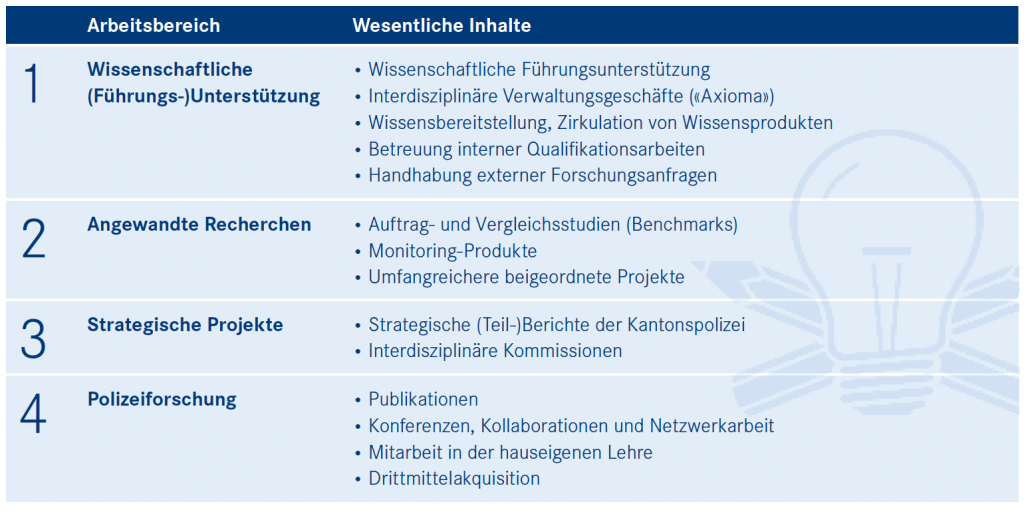
Das Polizeiwesen ist stark gefordert und steckt inmitten grosser Umbrüche. Die Abteilung Polizeiwissenschaften hilft der Kantonspolizei Basel-Stadt und dem Schweizer Polizeiwesen, diese mit mehr Fachwissen, methodisch robusten und konzeptionell klaren Wissensprodukten besser zu meistern. Der Zeitschriftenbeitrag skizziert, wie sie dazu vier Arbeitsbereiche bedient und einen einzigartigen hybriden Arbeitsansatz verfolgt.
Zwischen Forschungs- und Stabsstelle: Die vier Aufgabenbereiche der Abteilung Polizeiwissenschaften
Hagmann, Jonas (2024). Hybride Forschung mit, für und über Polizei: Ein Blick in die Arbeit der Abteilung Polizeiwissenschaften. BasileaInfo 1/2024: 8-9. PDF
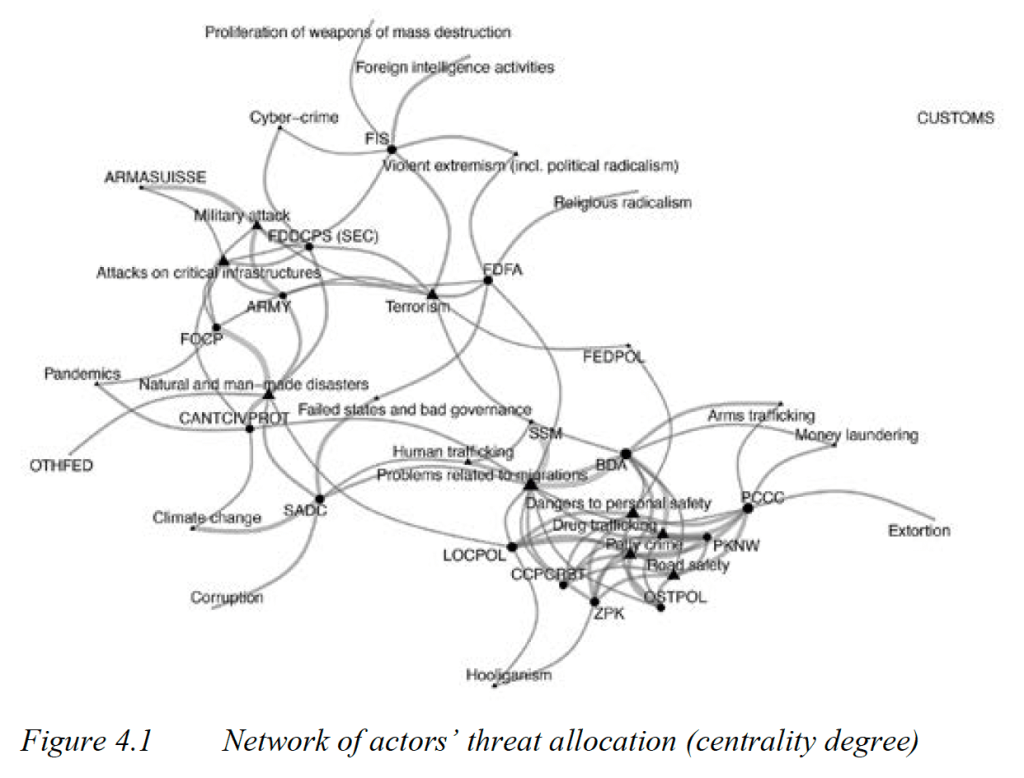
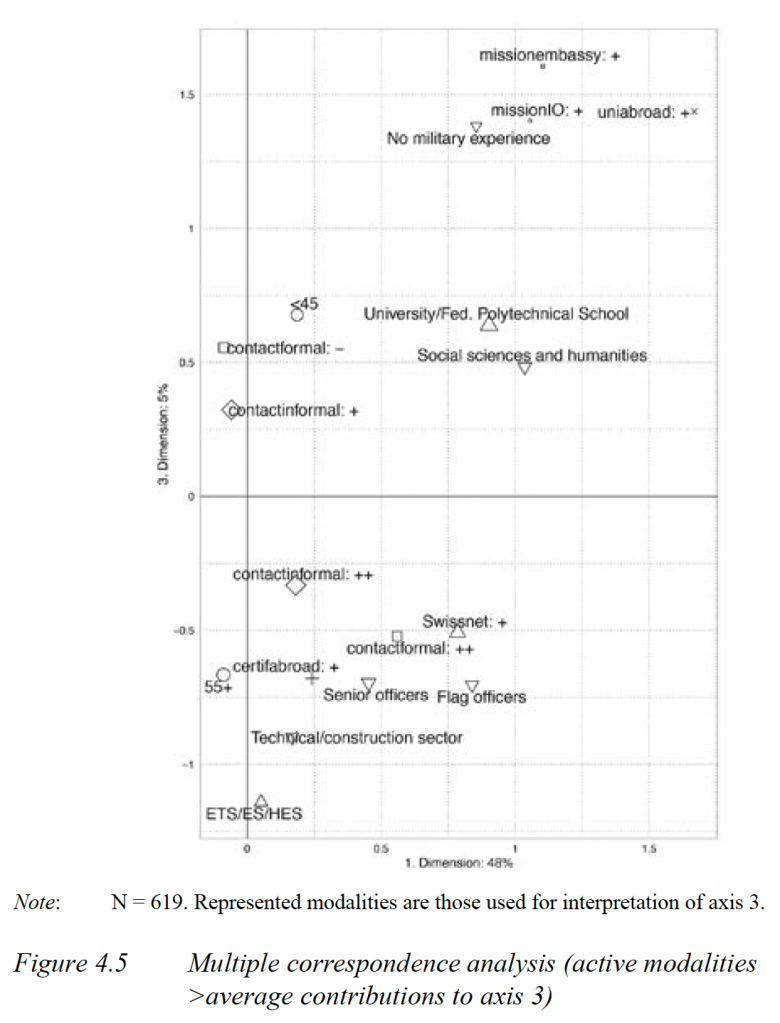
National security policy defies easy analysis. State action in the security domain is extraordinarily diverse and wide-ranging, stretching from defense and diplomacy to civil protection, public order and social security. As a result, conventional differentiations – such as between internal and external security, police and military, or public and private security production – became outdated and do not provide sufficient analytical to understand how the national security is configured and evolving. Bourdieu’s field theory is one useful way to better capture the complexity of the national security domain. In its view, the numerous specialists active in the domain form a larger professional space, whose inner workings are co-determined by positions, knowledges, individual skills and professional practices that may themselves be competing with one another. The chapter sets out this understanding and offers a deep empirical account of the Swiss national security field’s (re-)configuration in the 2010s. It shows what actors worked on what kind of security challenge(s) and in collaboration with whom, and it charts the forms of ‘capital’ (education, professional experiences, military ranks etc.) on which these practices were drawing.
Who work on what threats? The production of national security in Switzerland in the 2010s
On what forms of ‘capital’ are the practices based? Switzerland in the 2010s
Davidshofer, Stephan; Tawfik, Amal; Hagmann, Jonas (2024). Security as a field of force: the case of Switzerland in the mid-2010s. In: Dubois, Vincent (ed.). Bringing Bourdieu’s Theory of Fields to Critical Policy Analysis, pp. 74-89. Cheltenham: Edward Elgar. PDF
La sécurité est un objet de recherche protéiforme et mouvant par excellence, pour preuve l’incontournable entrée en matière l’évoquant en général comme un concept essentiellement contesté. Ainsi, aborder la question de l’ action de l’État en matière de sécurité renvoie à des univers sociaux et des pratiques extrêmement diverses. En mobilisant le concept de champ, ce chapitre propose de penser de manière relationnelle la production des savoirs sur l’(in)sécurité comme émanant d’un espace social autonome et dynamique généré par des agents pouvant être définis comme des professionnels de la gestion de la menace et des inquiétudes. Issue d’un projet de recherche financé par le Fonds national suisse de la recherche scientifique, la contribution a le double objectif de mobiliser la littérature existante sur le champ de la sécurité afin d’analyser les dynamiques contemporaines de sécurité en Suisse et de proposer des solutions pratiques pour tout chercheur souhaitant mener une analyse systématique de la sorte.
Graphique 1 : Menaces selon les acteurs (centralité de degré)
Davidshofer, Stephan; Tawfik, Amal; Hagmann, Jonas (2023). La politique de sécurité comme produit du rapport de forces au sein du champ. Le cas de la Suisse au milieu des années 2010. In: Dubois, Vincent (ed.). Les structures sociales de l’action publique : Analyser les politiques publiques avec la sociologie des champs, pp127-163. Paris: Editions du Croquant. PDF
What are technologies of violence, and how did they evolve? How do technologies relate to power relations in the field, and how do they instruct empirical and analytical work in the International Relations discipline? This conversation with Keith Krause, Professor at the Graduate Institute of International and Development Studies (IHEID) in Geneva and Director the Centre on Conflict, Development and Peacebuilding (CCDP) there, explores how technologies of violence evolved over time, and with what effects on security practice and analysis.
Keith Krause
Dunn Cavelty, Myriam; Hagmann, Jonas (2018). Technologies of violence: A conversation with Keith Krause. In Kaltofen, Carolin; Carr, Madeline; Acuto, Michele (eds.). Technologies of International Relations: Continuity and Change, pp97-106. London/New York: Palgrave MacMillan. PDF
It is widely known that national security fields changed considerably in the last decades. Different from the late Cold War years, when they focused on military threats, were closely orchestrated by Defence Ministries and contained few international contacts, national security ‘systems’ today handle wide sets of dangers, draw on complex casts of actors across levels of government, and often maintain working relations with multiple foreign partners. This comprehensive reconfiguration of national security fields is a central theme to security scholars and policymakers alike – but also difficult to pin down for methodological reasons. Written documentation on security agencies does not give precise indication of actual everyday inter-agency work practices, and assessments of nationwide security work across functions and levels of government are challenging by sheer questions of size. Adopting a practice-oriented approach to security research, this article draws on an unparalleled nationwide data collection effort to differentiate and map-out the Swiss security field’s programmatic and institutional evolution.
Figure 1: Ministerial threat management practice
Figure 11: Transnational inter-agency cooperation in Swiss national security
Hagmann, Jonas; Davidshofer, Stephan; Tawfik, Amal; Wenger, Andreas; Wildi, Lisa (2018). The programmatic and institutional (re-)configuration of the Swiss national security field. Swiss Political Science Review 24(3): 215-245. PDF / Score tables / OpenAccess URL
How do notions of collective international insecurity come about, and what are their effects on foreign policy-making? The Copenhagen School’s securitization theory offers a powerful take on the political construction of threats. In its original variant, however, the theory focuses strongly on the deontic (norm-breaking) powers of ‘security talk’ – and not on the threat sceneries that the latter substantively describes. This article addresses this latter link by reworking securitization into a positional/relational argument. Seen its way, the framing of something as threatening comes with larger – often implicit – claims about threatening and threatened actors in world politics. The empirical cases on post-war France and West Germany show how securitization equals an epistemological systematization of international affairs, for the political construction of collective international danger becomes an ordering process that conditions foreign policy strategizing.
Hagmann, Jonas (2018). Securitisation and the production of international order(s). Journal of International Relations and Development 21(1): 194-222. PDF
Depuis la naissance de la Suisse moderne en 1848, sécurité a constamment rimé avec neutralité. De nos jours, cette dernière reste encore perçue par une large majorité de Suisses comme une garantie de protection face aux tumultes du monde. Cependant, dans la pratique, cette singularité est remise en question. Notre article dans Questions internationales démontre que dans un monde interdépendant, l’impératif de coopération, indispensable pour gérer les menaces avant tout globales et transnationales, s’accompagne d’une discrète mais profonde transformation du paysage sécuritaire du pays situé au cœur de l’Europe.
Davidshofer, Stephan; Tawfik, Amal; Hagmann, Jonas (2017). La sécurité suisse: entre neutralité et impératif de coopération. Questions internationales 87 (2017/5): 25-29. PDF
What happens to foreign politics when actors, things or processes are presented as threats? This book explains state’s international behavior based on a reflexive framework of insecurity politics. It argues that governments act on knowledge of international danger available in their societies, and that such knowledge is organized by varying ideas of who threatens whom and how. The book develops this argument and illustrates it by means of various European case studies (Germany, France, and Switzerland in particular). Moving across European history and space, these show how securitization projected abroad evolving – and often contested – local ideas of the organization of international insecurity, and how such knowledges of world politics conditioned foreign policymaking on their own terms. By moving the discipline from systemic theorizing to a theory of international systematization, the book seeks to show how world politics is, in practice, often conceived in a different way than that assumed by grand IR theory. Depicting national insecurity as a matter of political construction, the book also raises the challenging question of whether certain projections of insecurity may be considered more warranted than others.
* Paperback versions of the book can now be ordered through Routledge.
Hagmann, Jonas (2015). (In-)security and the production of international relations: The politics of securitisation in Europe. London/New York: Routledge, 244p. URL
La politique Suisse de sécurité ne se résume pas à ceux qui en écrivent ses rapports. Une analyse du travail au quotidien de ses acteurs, au contact avec les défis sécuritaires de notre temps, permet de brosser le tableau d’un univers de plus en plus interconnecté et en pleine expansion. Un projet de recherche financé par le Fonds national pour la recherche scientifique (FNS) montre qu’en effet, les questions migratoires et de terrorisme constituent aujourd’hui le centre de gravité de la sécurité Suisse, et que ceci fait basculer le champ professionnel et institutionnel vers la gestion de menaces transnationales.
Davidshofer, Stephan; Tawfik, Amal; Wenger, Andreas; Hagmann, Jonas; Wildi, Lisa (2016). Ce que signifie concrètement la politique de sécurité Suisse. Le Temps, 20 December: 10. PDF
Wer arbeitet heute mit wem und wie intensiv zu welchen Gefahren? Basierend auf einer umfassenden und einzigartigen Datenerhebung kartiert dieser Beitrag die Entwicklung des gesamtschweizerischen Sicherheitsbereichs. Die Darstellung der praktischen Arbeitsteilungen, der inneren und der äusseren Kooperationen, sowie der beruflichen Profile und Werdegänge von Sicherheitspraktikern schafft einen analytisch differenzierten und empirisch fundierten Beitrag zu den anhaltenden Diskussionen über die landesweite sicherheitspolitische Steuerung. So zeigt das Kapitel, wie Sorgen um Migration und Terrorismus nunmehr das Sicherheitsfeld integrieren und das nationale Sicherheitsfeld hierarchisch in anleitende und Service-orientierte Behörden strukturiert, aber auch wie sich die internationale Sicherheitszusammenarbeit zu einer regierungsstufenübergreifenden Praxis wandelte und sich die beruflichen Werdegänge der einzelnen Unterbereiche nun langsam vermischen.
Hagmann, Jonas; Wenger, Andreas; Wildi, Lisa; Davidshofer, Stephan; Tawfik, Amal (2016). Schweizer Sicherheitspolitik in der Praxis: Eine empirische Momentaufnahme. In Nünlist, Christian; Thränert, Oliver (eds.). Bulletin zur Schweizer Sicherheitspolitik, pp99-134. Zürich: Center for Security Studies, ETH Zürich. PDF
 La sécurité est un objet de recherche protéiforme et mouvant par excellence, pour preuve l’incontournable entrée en matière l’évoquant en général comme un concept essentiellement contesté. Ainsi, aborder la question de l’ action de l’État en matière de sécurité renvoie à des univers sociaux et des pratiques extrêmement diverses. En mobilisant le concept de champ, ce chapitre propose de penser de manière relationnelle la production des savoirs sur l’(in)sécurité comme émanant d’un espace social autonome et dynamique généré par des agents pouvant être définis comme des professionnels de la gestion de la menace et des inquiétudes. Issue d’un projet de recherche financé par le Fonds national suisse de la recherche scientifique, la contribution a le double objectif de mobiliser la littérature existante sur le champ de la sécurité afin d’analyser les dynamiques contemporaines de sécurité en Suisse et de proposer des solutions pratiques pour tout chercheur souhaitant mener une analyse systématique de la sorte.

 It is widely known that national security fields changed considerably in the last decades. Different from the late Cold War years, when they focused on military threats, were closely orchestrated by Defence Ministries and contained few international contacts, national security ‘systems’ today handle wide sets of dangers, draw on complex casts of actors across levels of government, and often maintain working relations with multiple foreign partners. This comprehensive reconfiguration of national security fields is a central theme to security scholars and policymakers alike – but also difficult to pin down for methodological reasons. Written documentation on security agencies does not give precise indication of actual everyday inter-agency work practices, and assessments of nationwide security work across functions and levels of government are challenging by sheer questions of size. Adopting a practice-oriented approach to security research, this article draws on an unparalleled nationwide data collection effort to differentiate and map-out the Swiss security field’s programmatic and institutional evolution.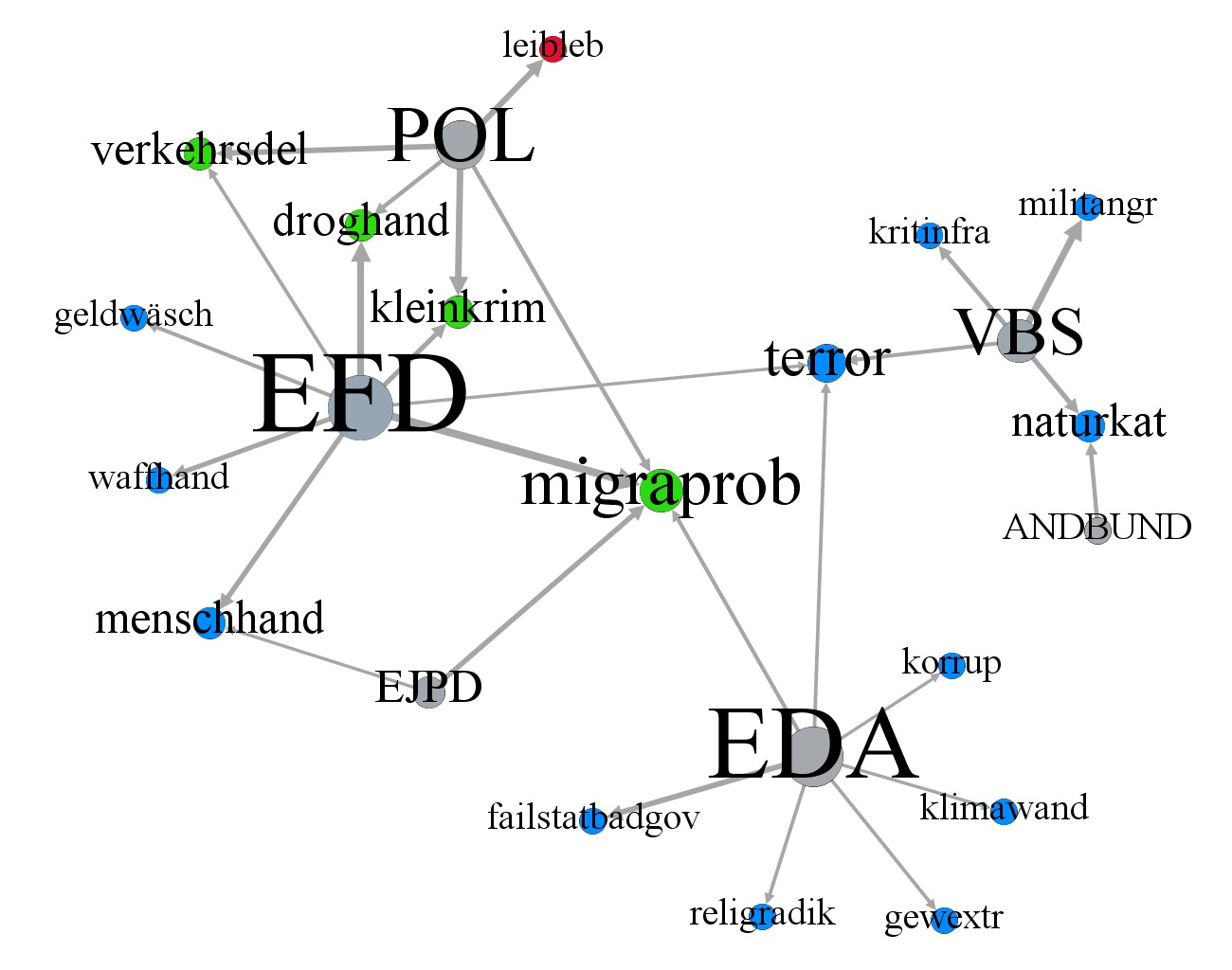

 How do notions of collective international insecurity come about, and what are their effects on foreign policy-making? The Copenhagen School’s securitization theory offers a powerful take on the political construction of threats. In its original variant, however, the theory focuses strongly on the deontic (norm-breaking) powers of ‘security talk’ – and not on the threat sceneries that the latter substantively describes. This article addresses this latter link by reworking securitization into a positional/relational argument. Seen its way, the framing of something as threatening comes with larger – often implicit – claims about threatening and threatened actors in world politics. The empirical cases on post-war France and West Germany show how securitization equals an epistemological systematization of international affairs, for the political construction of collective international danger becomes an ordering process that conditions foreign policy strategizing.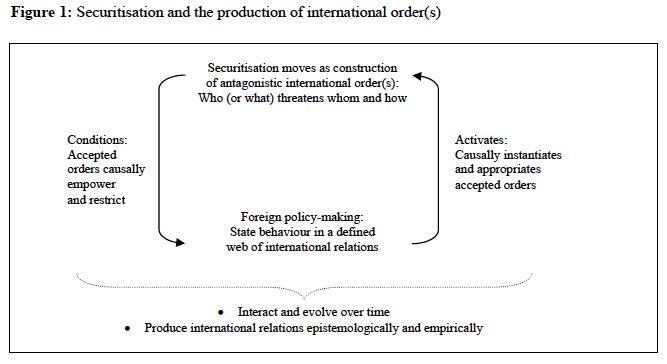
 Depuis la naissance de la Suisse moderne en 1848, sécurité a constamment rimé avec neutralité. De nos jours, cette dernière reste encore perçue par une large majorité de Suisses comme une garantie de protection face aux tumultes du monde. Cependant, dans la pratique, cette singularité est remise en question. Notre article dans Questions internationales démontre que dans un monde interdépendant, l’impératif de coopération, indispensable pour gérer les menaces avant tout globales et transnationales, s’accompagne d’une discrète mais profonde transformation du paysage sécuritaire du pays situé au cœur de l’Europe.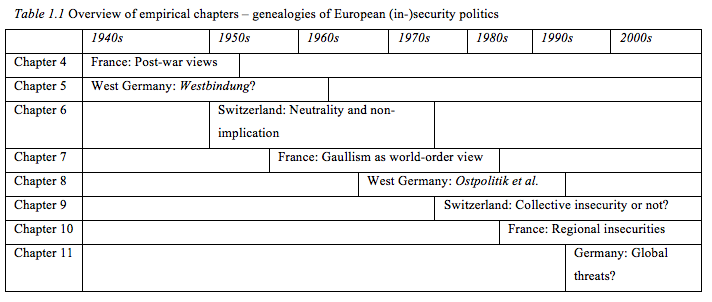


 :: Jonas Hagmann ::