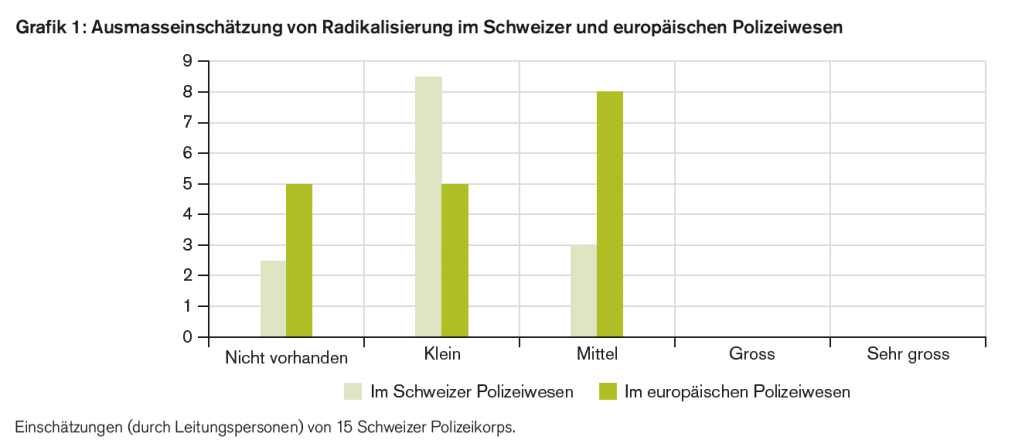
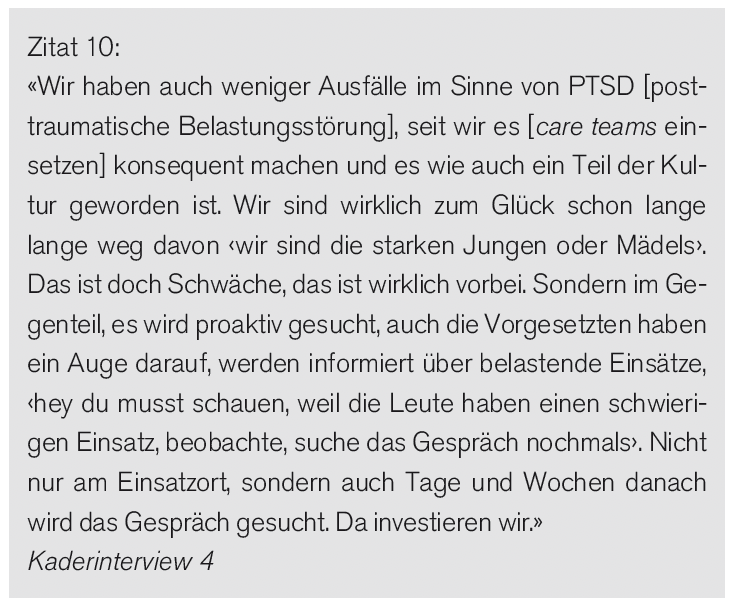
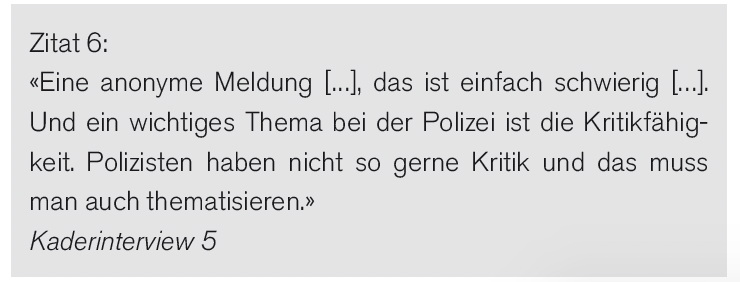
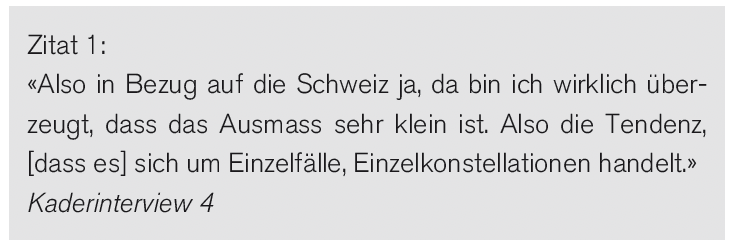
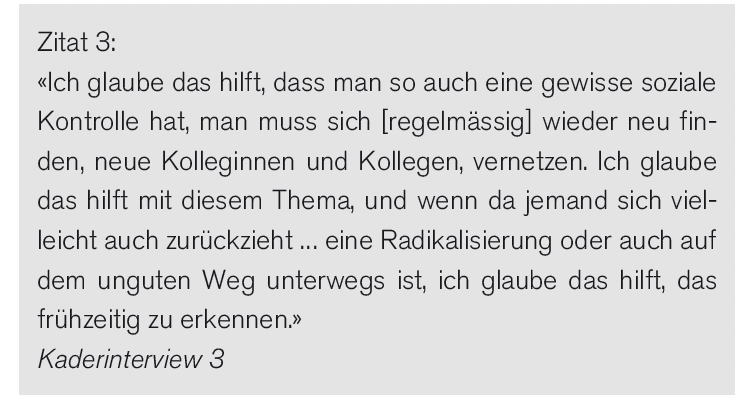
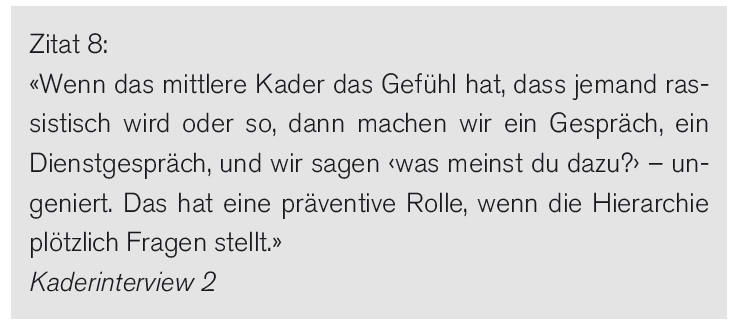
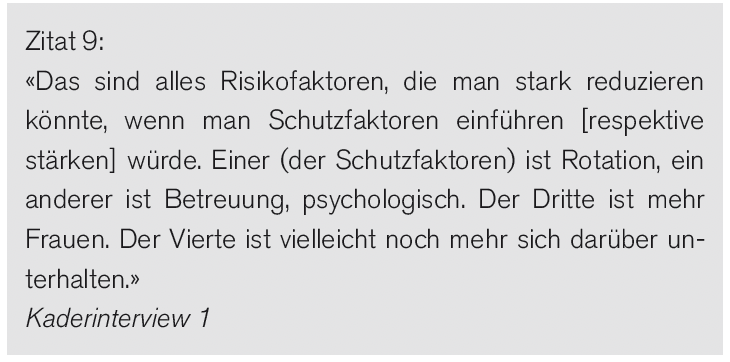
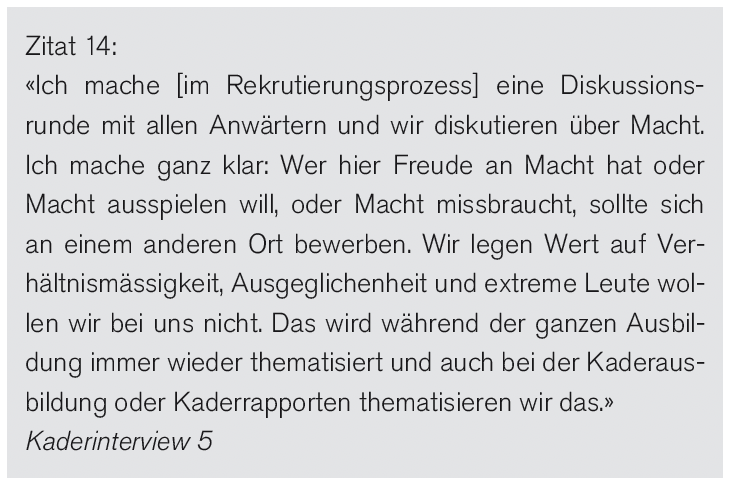
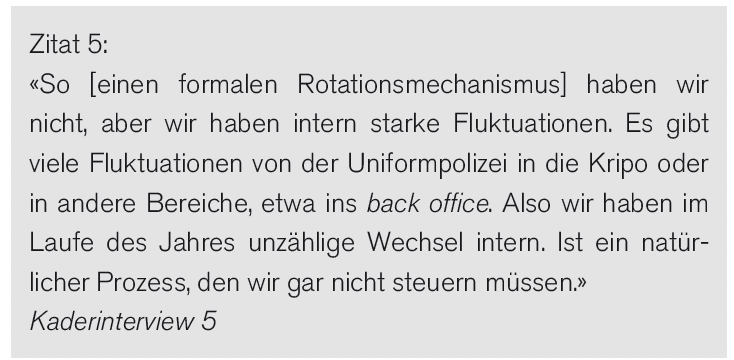
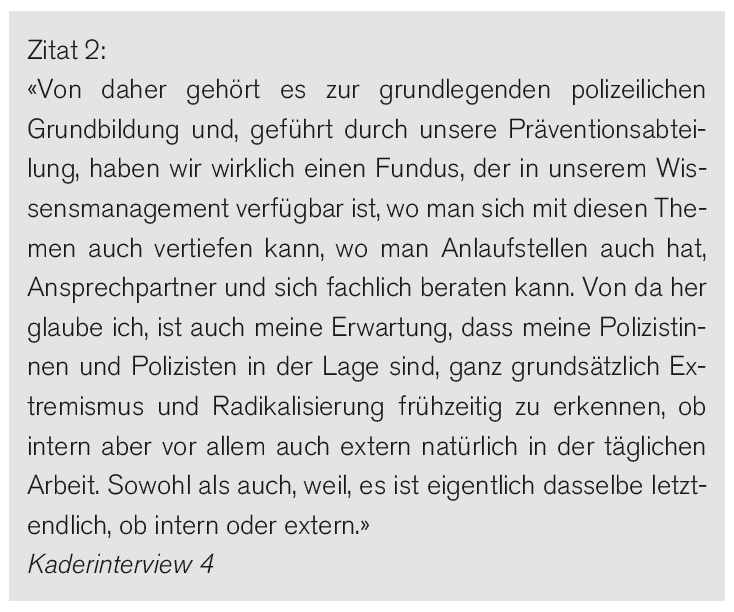
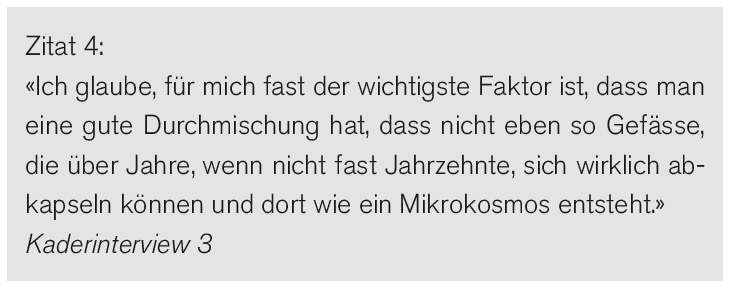
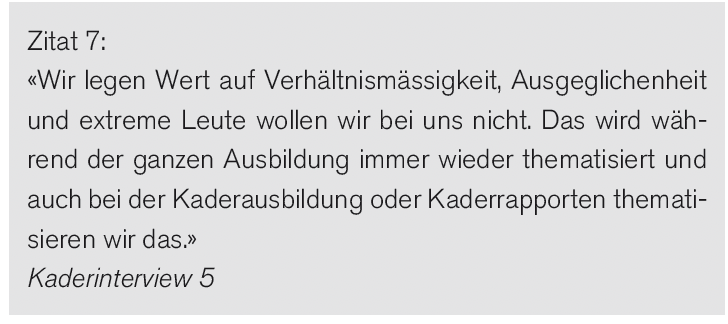
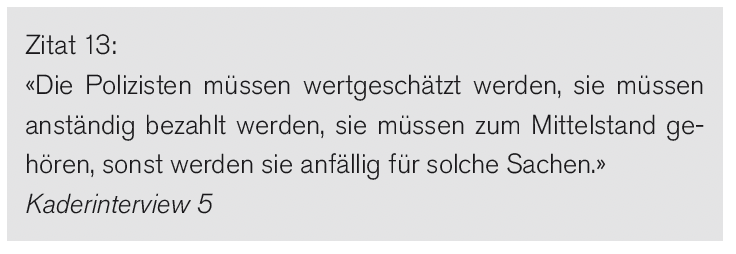
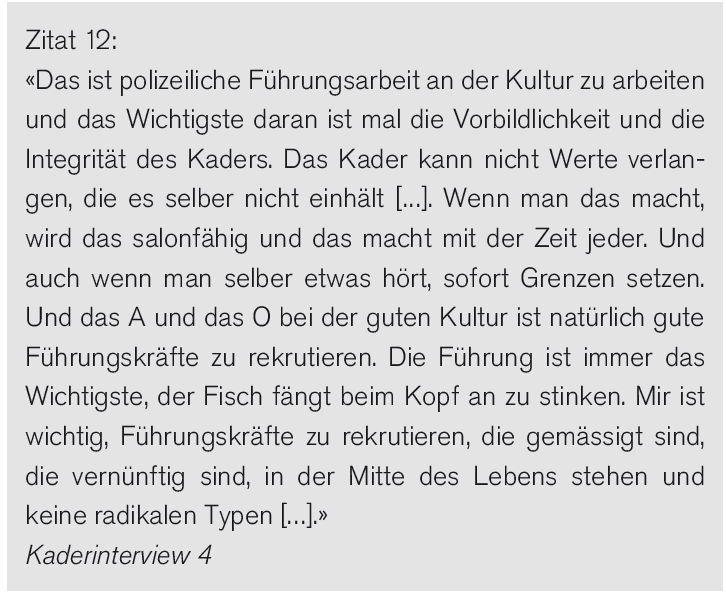
Die Erkennung, Handhabung und Vorbeugung von Radikalisierung innerhalb der Sicherheitsbehörden ist zunehmend Gegenstand der internationalen Forschung. Wie die Polizeiorganisationen die Problematik selber einordnen und handhaben ist jedoch weiterhin schlecht erschlossen. Basierend auf einer qualitativen Befragung von Leitungspersonen aus dem Schweizer Polizeiwesen gibt der Beitrag empirische Einblicke in dieses Praxiswissen. Er ergänzt den Forschungsstand mit der institutionellen Handhabung von Radikalisierungsphänomenen im Polizeibereich und formuliert daraus.
Hagmann, Jonas; Staubli, Silvia; Gaia, Elisa (2025). Radikalisierung im Schweizer Polizeiwesen: Einordnung von Leitungspersonen aus der Polizeipraxis. Neue Zeitschrift für Kriminologie und Kriminalpolitik – NKrim/NCrim. 2/2025: 48-60. PDF
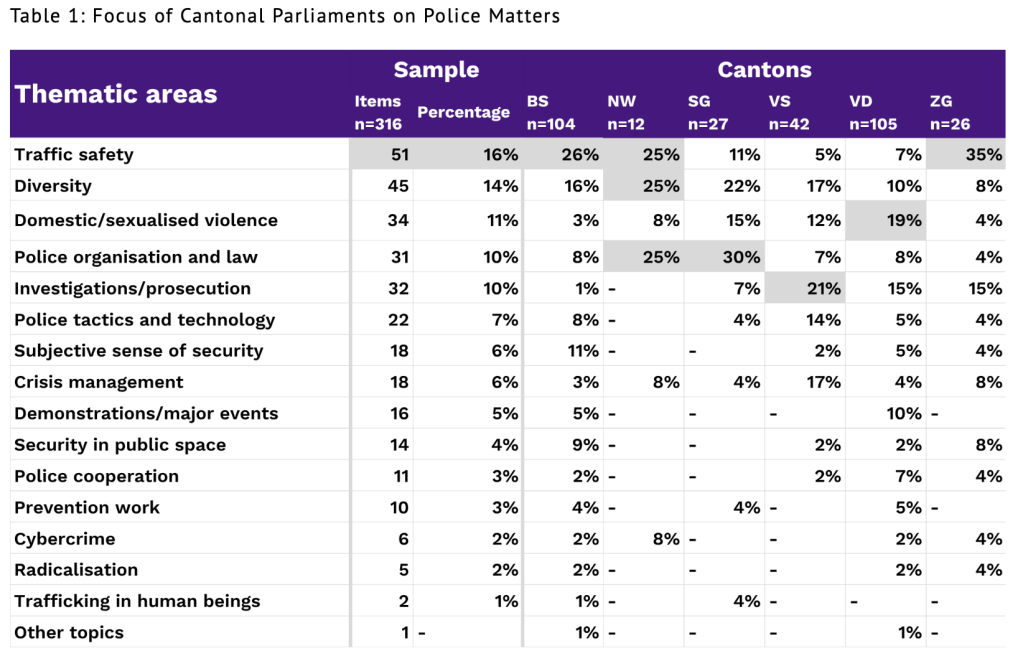
In Switzerland, the police sector is primarily a cantonal policy area – which means it is widely distributed across an uneven field of subnational entities. Also because of this, political debates surrounding policing in Switzerland are largely under-researched today. A systematic inter-cantonal understanding of how the police is a subject of political debate, for example, is still lacking. In a new snapshot analysis focusing on six cantons and one legislative year, Anna Grüninger and I shed light on how members of the cantonal parliaments engage with policing matters. The findings point to varying degrees of parliamentary activity, and a wide thematic range in their dealings with police issues — coupled with a notable reluctance to employ the most powerful parliamentary tools.
Grüninger, Anna; Hagmann, Jonas (2025). Umstrittene Polizei: Wie sich die Kantonsparlamente mit dem Polizeiwesen befassen / Comment les parlements cantonaux traitent-ils la police? / Controversial police: How the cantonal parliaments deal with policing. DeFacto. 24 September/27 October. PDF DE / PDF FR / PDF EN
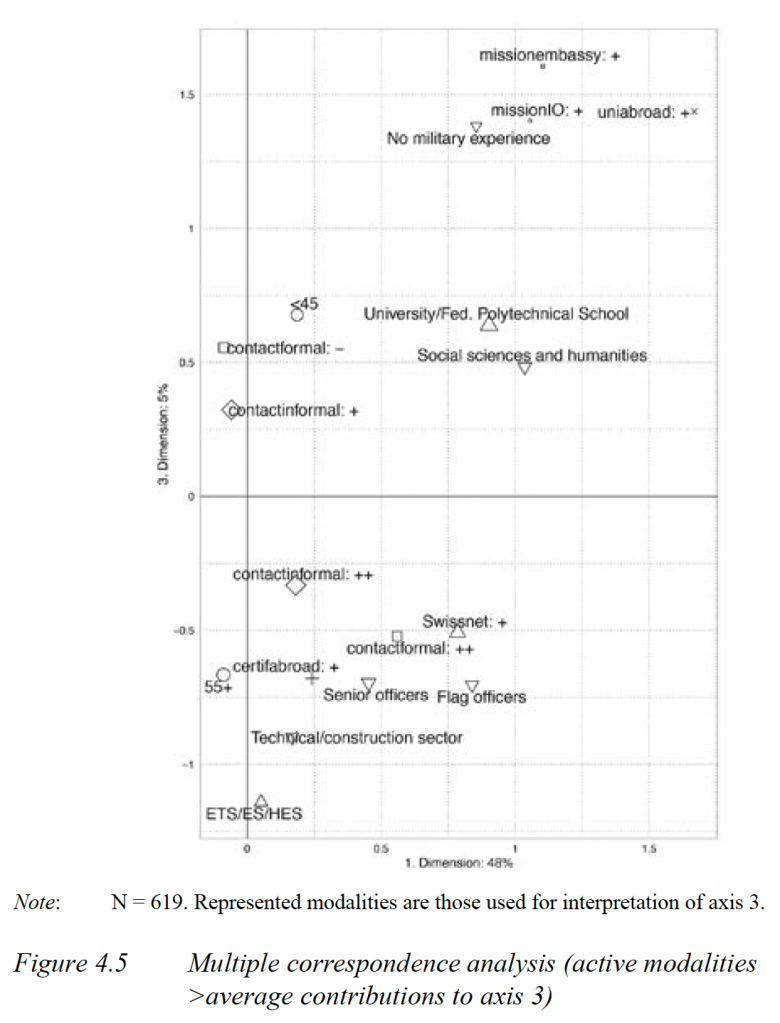
National security policy defies easy analysis. State action in the security domain is extraordinarily diverse and wide-ranging, stretching from defense and diplomacy to civil protection, public order and social security. As a result, conventional differentiations – such as between internal and external security, police and military, or public and private security production – became outdated and do not provide sufficient analytical to understand how the national security is configured and evolving. Bourdieu’s field theory is one useful way to better capture the complexity of the national security domain. In its view, the numerous specialists active in the domain form a larger professional space, whose inner workings are co-determined by positions, knowledges, individual skills and professional practices that may themselves be competing with one another. The chapter sets out this understanding and offers a deep empirical account of the Swiss national security field’s (re-)configuration in the 2010s. It shows what actors worked on what kind of security challenge(s) and in collaboration with whom, and it charts the forms of ‘capital’ (education, professional experiences, military ranks etc.) on which these practices were drawing.
Who work on what threats? The production of national security in Switzerland in the 2010s
On what forms of ‘capital’ are the practices based? Switzerland in the 2010s
Davidshofer, Stephan; Tawfik, Amal; Hagmann, Jonas (2024). Security as a field of force: the case of Switzerland in the mid-2010s. In: Dubois, Vincent (ed.). Bringing Bourdieu’s Theory of Fields to Critical Policy Analysis, pp. 74-89. Cheltenham: Edward Elgar. PDF
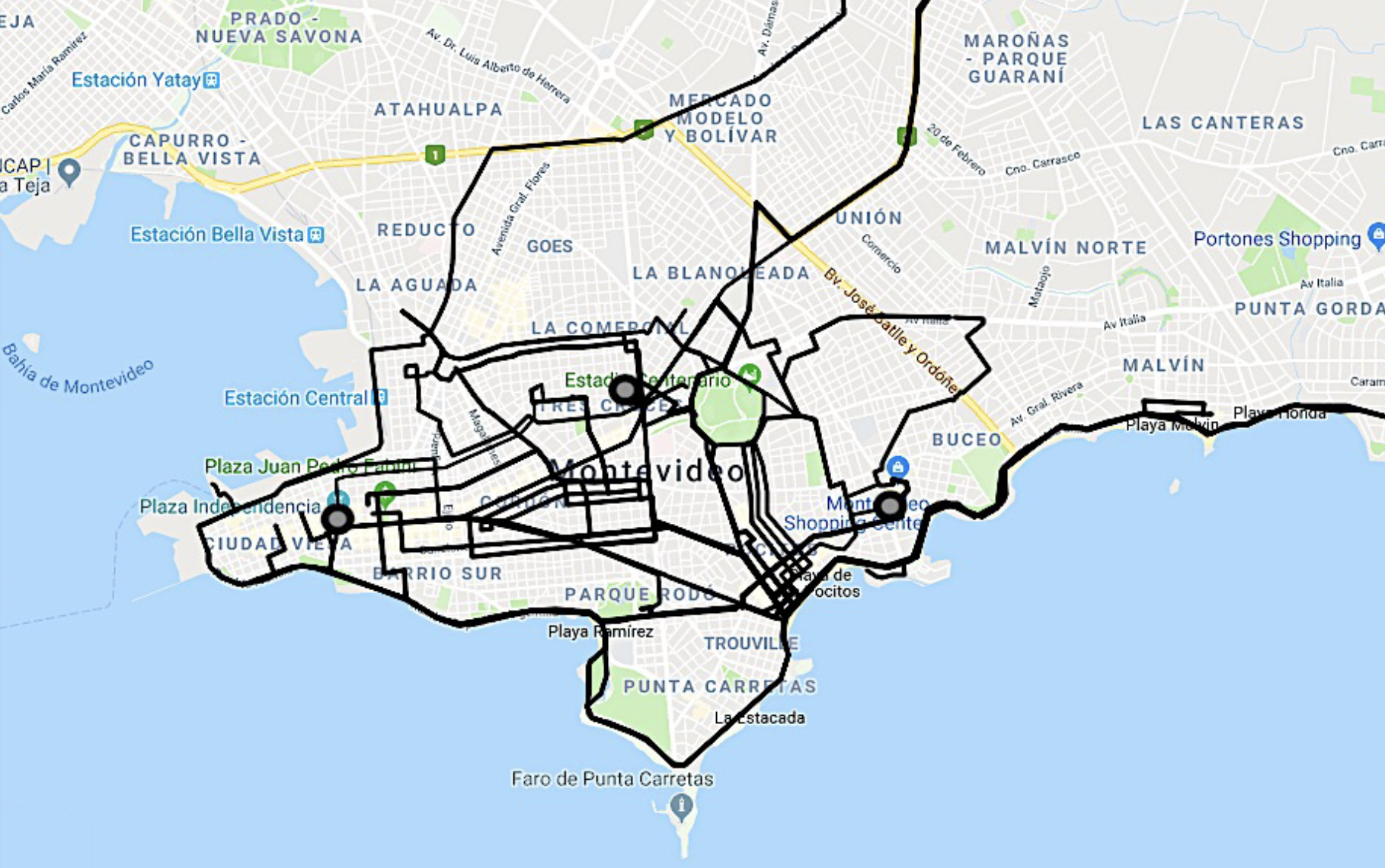
What is a city and how do we recognize and assess security dispositives in public spaces? This chapter draws on my research program and fieldwork in Switzerland, Morocco, Nepal and Uruguay. It presents ways of systematizing urban space, and discusses how research on human, digital, physical and conceptual urban control elements can be operationalized: How can we create case studies representative of an entire city? What role do interviews play and whom should we talk to to collect data? Can we retrace practices across longer periods of time? And then – how to compare findings across radically different cities/polities? Urban security practices are extraordinarily rich, deterritorialised and interdisciplinary. A critical approach to data collection and analysis allows recognizing this – and it helps to avoid reproducing simplistic and universalizing accounts of security.
Taxi-time in Montevideo: Sub-city labs, simplified research itinerary
Hagmann, Jonas (2023). Mapping urban security practices. In: Salter, Mark; Mutlu, Can; Frowd, Philippe (eds.). Research Methods in Critical Security Studies, pp145-154. London: Routledge. PDF
What are technologies of violence, and how did they evolve? How do technologies relate to power relations in the field, and how do they instruct empirical and analytical work in the International Relations discipline? This conversation with Keith Krause, Professor at the Graduate Institute of International and Development Studies (IHEID) in Geneva and Director the Centre on Conflict, Development and Peacebuilding (CCDP) there, explores how technologies of violence evolved over time, and with what effects on security practice and analysis.
Keith Krause
Dunn Cavelty, Myriam; Hagmann, Jonas (2018). Technologies of violence: A conversation with Keith Krause. In Kaltofen, Carolin; Carr, Madeline; Acuto, Michele (eds.). Technologies of International Relations: Continuity and Change, pp97-106. London/New York: Palgrave MacMillan. PDF
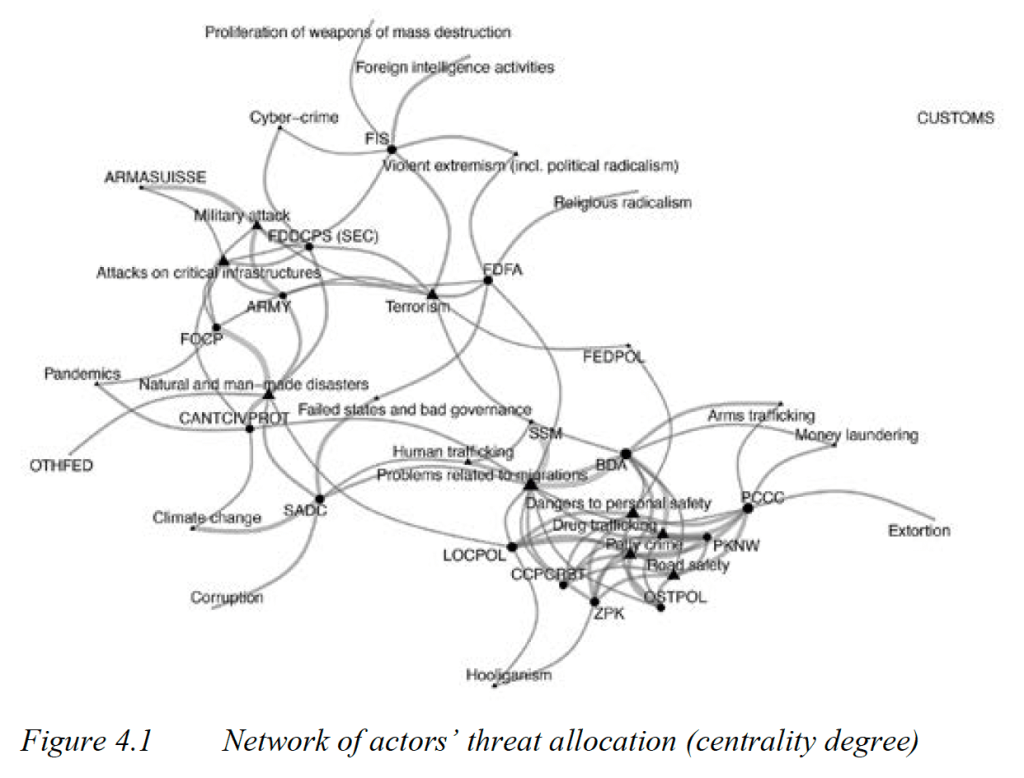
It is widely known that national security fields changed considerably in the last decades. Different from the late Cold War years, when they focused on military threats, were closely orchestrated by Defence Ministries and contained few international contacts, national security ‘systems’ today handle wide sets of dangers, draw on complex casts of actors across levels of government, and often maintain working relations with multiple foreign partners. This comprehensive reconfiguration of national security fields is a central theme to security scholars and policymakers alike – but also difficult to pin down for methodological reasons. Written documentation on security agencies does not give precise indication of actual everyday inter-agency work practices, and assessments of nationwide security work across functions and levels of government are challenging by sheer questions of size. Adopting a practice-oriented approach to security research, this article draws on an unparalleled nationwide data collection effort to differentiate and map-out the Swiss security field’s programmatic and institutional evolution.
Figure 1: Ministerial threat management practice
Figure 11: Transnational inter-agency cooperation in Swiss national security
Hagmann, Jonas; Davidshofer, Stephan; Tawfik, Amal; Wenger, Andreas; Wildi, Lisa (2018). The programmatic and institutional (re-)configuration of the Swiss national security field. Swiss Political Science Review 24(3): 215-245. PDF / Score tables / OpenAccess URL
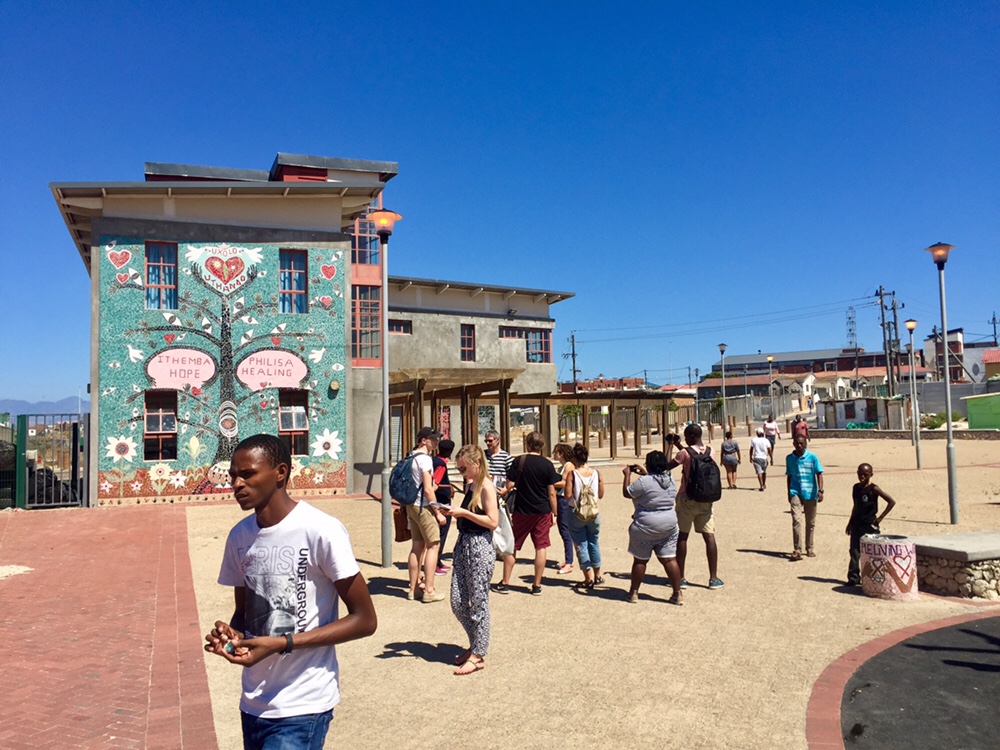
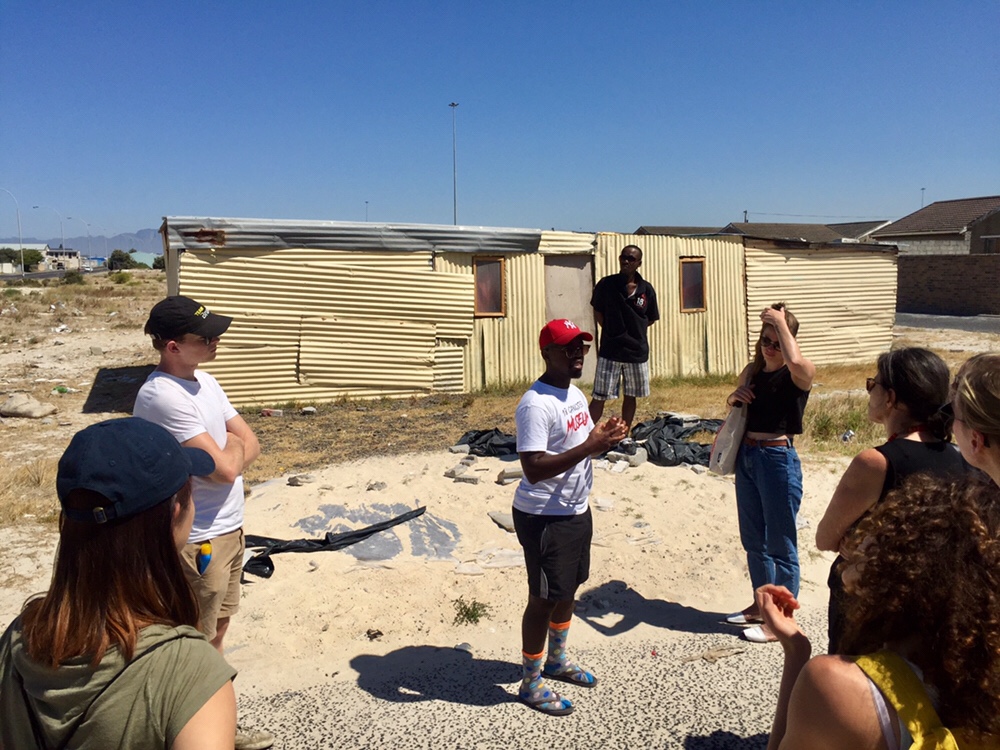
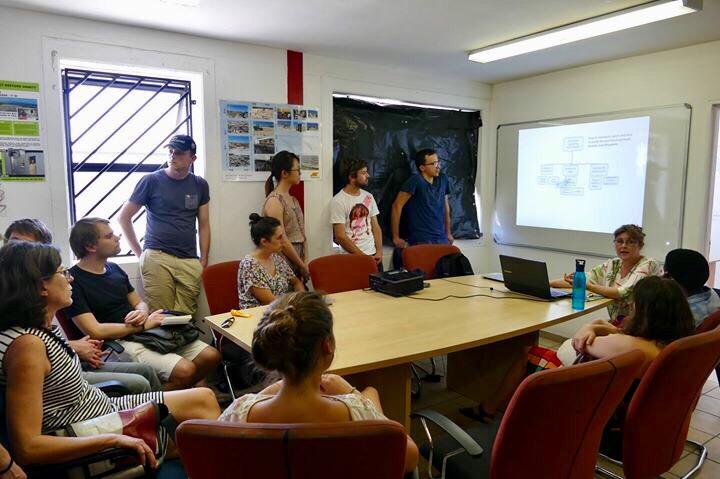
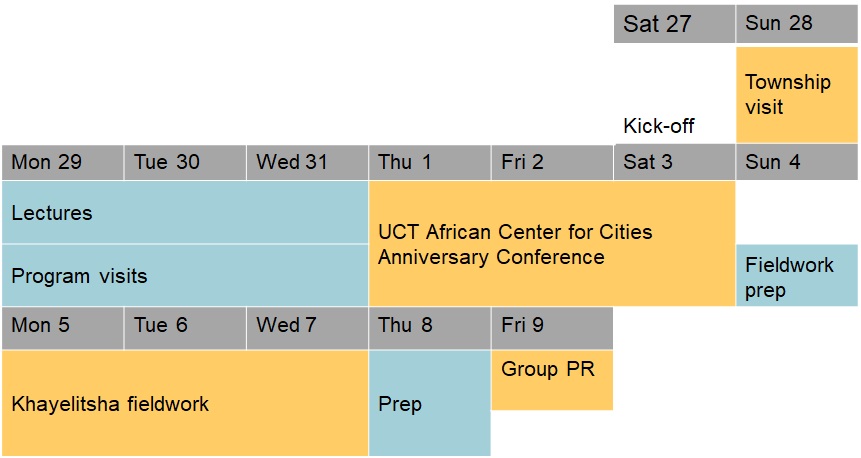
ETH Zürich covers our ongoing Winter School on urban (in-)security in the Cape Town township of Khayelitsha in a social media news stream. Visit the ISTP homepage, facebook or twitter account for updates, reports and audio-visual material.
Khayelitsha – Harare and Monwabisi Park
Program visits – Ikhayalami/EmpowerShack and Social Justice Coalition
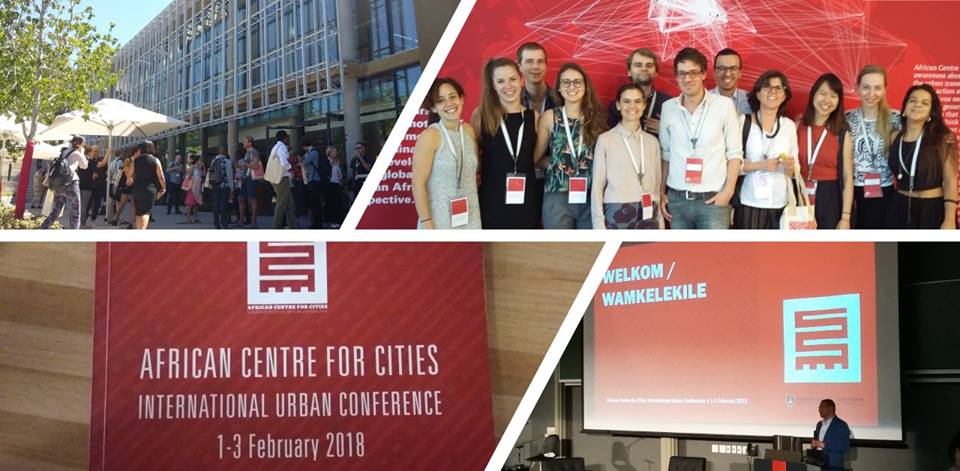
African Centre for Cities – 10th Anniversary Conference
There is much agreement that urban security dispositives acquired new qualities in recent years. But do the dominant diagnoses hold up to detailed empirical verification? This forthcoming piece in International Political Sociology re-engages the pertinent security studies literature. In the age of globalisation and urbanisation, technological innovation and liberal policy ideals, how are urban security apparatuses reorganised, and in what relations do they stand to local societal and political orders? Describing the evolving security handling of three urban spaces – a site of mobility (HB Zürich), a public square (Bundesplatz Bern) and a place of mass commerce (St. Jakob Park Basel) –, the article makes the case for more nuanced engagements with urban security ensembles, their technological evolution, relations with democratic ideals, globalisation and de-territorialisation both in and beyond Western polities.
Securing public space in Switzerland – Bundesplatz Bern
Hagmann, Jonas (forthcoming). Security in the society of control: The politics and practices of securing urban spaces. International Political Sociology. PDF
La politique Suisse de sécurité ne se résume pas à ceux qui en écrivent ses rapports. Une analyse du travail au quotidien de ses acteurs, au contact avec les défis sécuritaires de notre temps, permet de brosser le tableau d’un univers de plus en plus interconnecté et en pleine expansion. Un projet de recherche financé par le Fonds national pour la recherche scientifique (FNS) montre qu’en effet, les questions migratoires et de terrorisme constituent aujourd’hui le centre de gravité de la sécurité Suisse, et que ceci fait basculer le champ professionnel et institutionnel vers la gestion de menaces transnationales.
Davidshofer, Stephan; Tawfik, Amal; Wenger, Andreas; Hagmann, Jonas; Wildi, Lisa (2016). Ce que signifie concrètement la politique de sécurité Suisse. Le Temps, 20 December: 10. PDF
Ein Forschungsprojekt liefert erstmals umfassende Einblicke in die Schweizer Sicherheitspolitik, wie sie tagtäglich von Praktikern umgesetzt wird. Wer arbeitet heute mit wem wie intensiv zusammen – und zu welchen Gefahren? Die empirische Momentaufnahme zeigt auf, wie sich das sicherheitspolitische Gesamtsystem vom klassischen Fall der militärischen Landesverteidigung entfernte und heute stark auf Gefahren der globalen Mobilität – Migration und Terrorismus insbesondere – fokussiert. Diese Neuausrichtung wird von neuen landesweiten und grenzübergreifenden Kooperationspraktiken begleitet. Dabei zeigt sich im Bereich der inneren Sicherheit eine besonders ausgeprägte Internationalisierung der Sicherheitsarbeit sowohl von Bund als auch Kantonen. Gleichzeitig wandeln sich die Berufsprofile und Karrierewege der im Politikfeld tätigen Praktiker. Internationale Erfahrungen, akademische Ausbildung, militärische Grade und weitere Kompetenzen werden von verschiedenen Teilbereichen des Arbeitsbereichs neu bewertet.
Hagmann, Jonas; Wenger, Andreas; Wildi, Lisa; Davidshofer, Stephan; Tawfik, Amal (2016). Sicherheit als Verbundaufgabe: Veränderte Bedrohungsszenarien stellen den Bund und die Kantone vor grosse Herausforderungen. Neue Zürcher Zeitung 248, 24 October: 12. PDF



 It is widely known that national security fields changed considerably in the last decades. Different from the late Cold War years, when they focused on military threats, were closely orchestrated by Defence Ministries and contained few international contacts, national security ‘systems’ today handle wide sets of dangers, draw on complex casts of actors across levels of government, and often maintain working relations with multiple foreign partners. This comprehensive reconfiguration of national security fields is a central theme to security scholars and policymakers alike – but also difficult to pin down for methodological reasons. Written documentation on security agencies does not give precise indication of actual everyday inter-agency work practices, and assessments of nationwide security work across functions and levels of government are challenging by sheer questions of size. Adopting a practice-oriented approach to security research, this article draws on an unparalleled nationwide data collection effort to differentiate and map-out the Swiss security field’s programmatic and institutional evolution.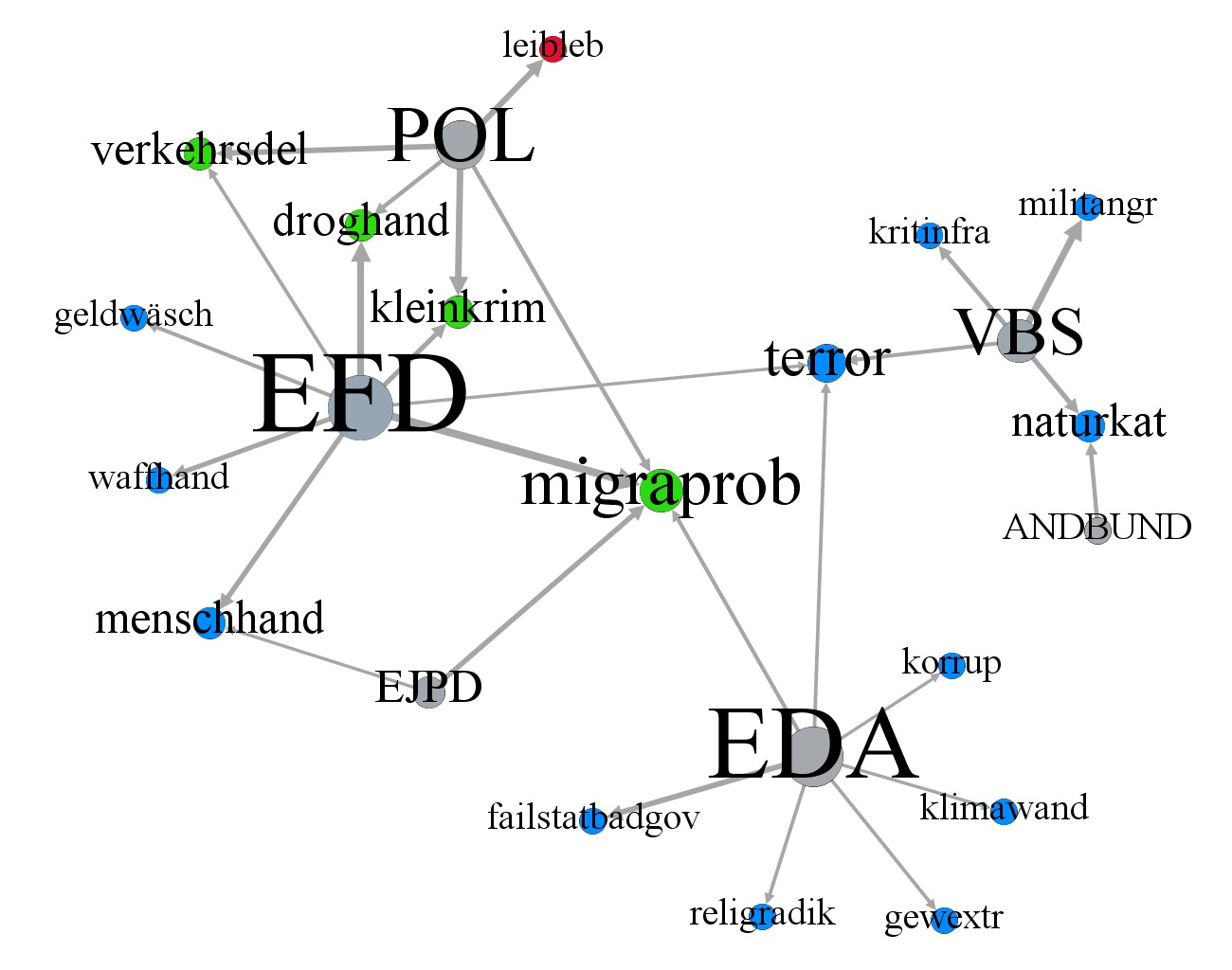











 :: Jonas Hagmann ::