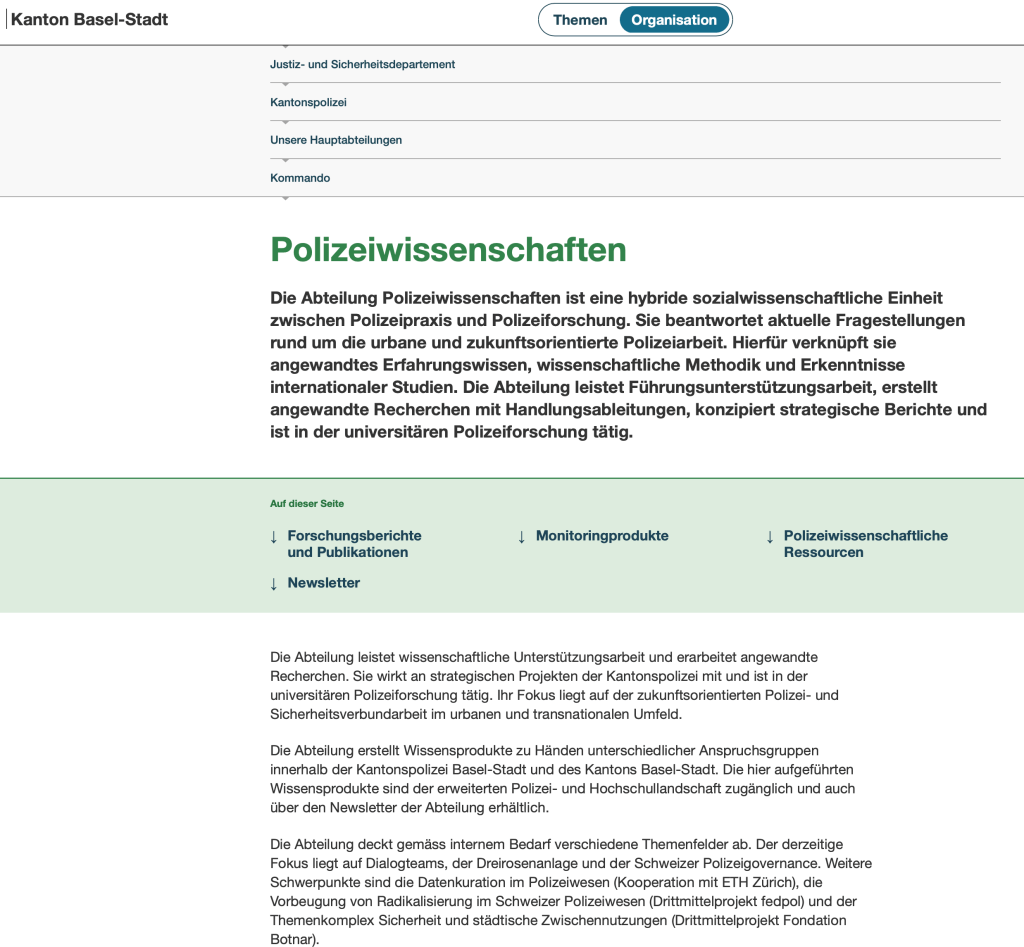
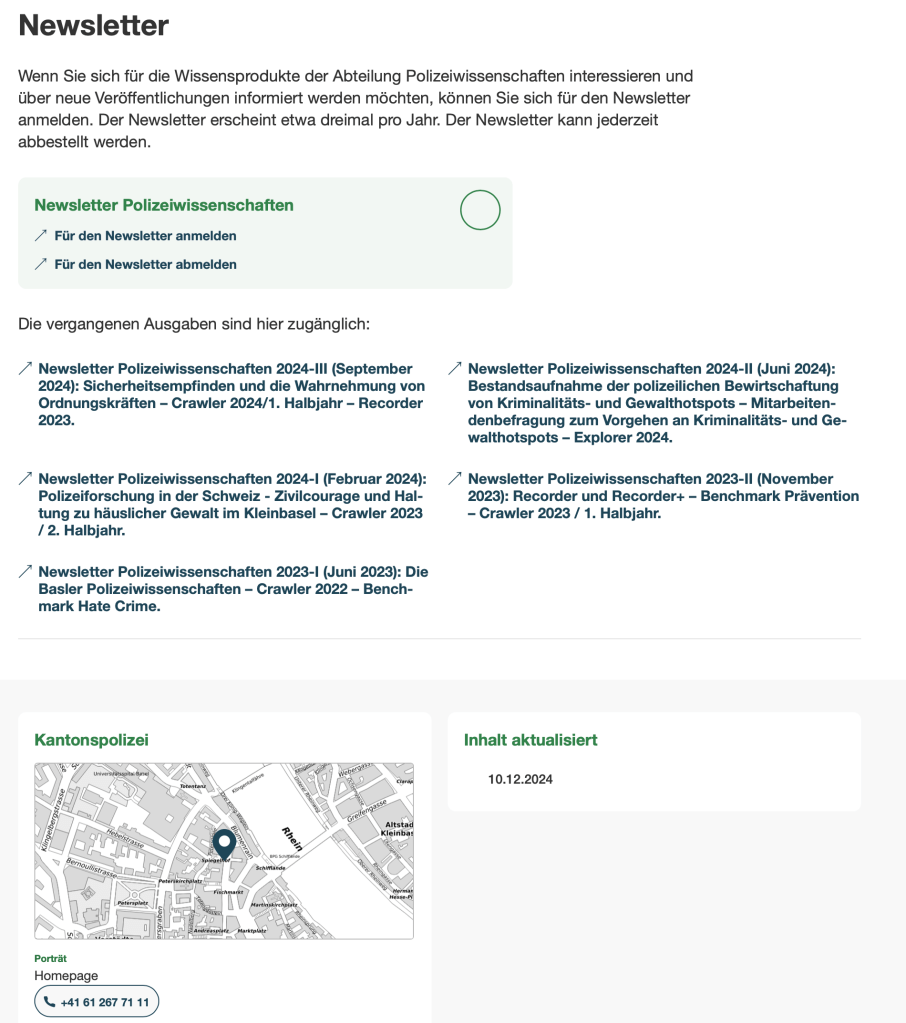
Die Abteilung Polizeiwissenschaften ist online gegangen, sie verfügt nun über eine eigene Website und einen Newsletter. Der Newsletter kann auf der Webseite abonniert werden und erscheint 3-4x jährlich.
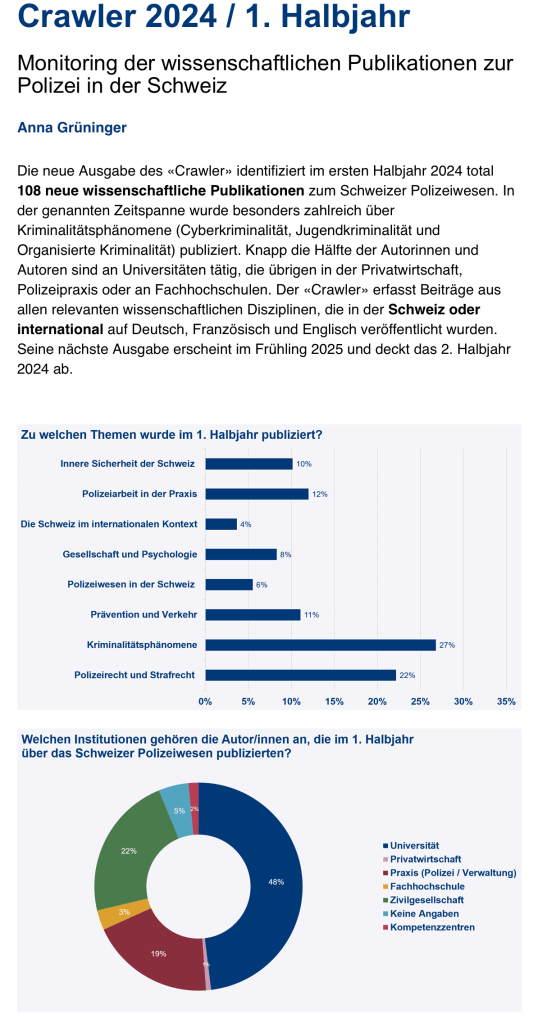
Die Erstausgabe beinhaltet eine Auslegung der Basler Polizeiwissenschaften, ein integrales Monitoring der wissenschaftlichen Publikationen über das Schweizer Polizeiwesen sowie ein Benchmark zum Thema Erfassung von «Hassdelikten» durch Schweizer Polizeikorps (letztere Studie auch in französischer Sprache).
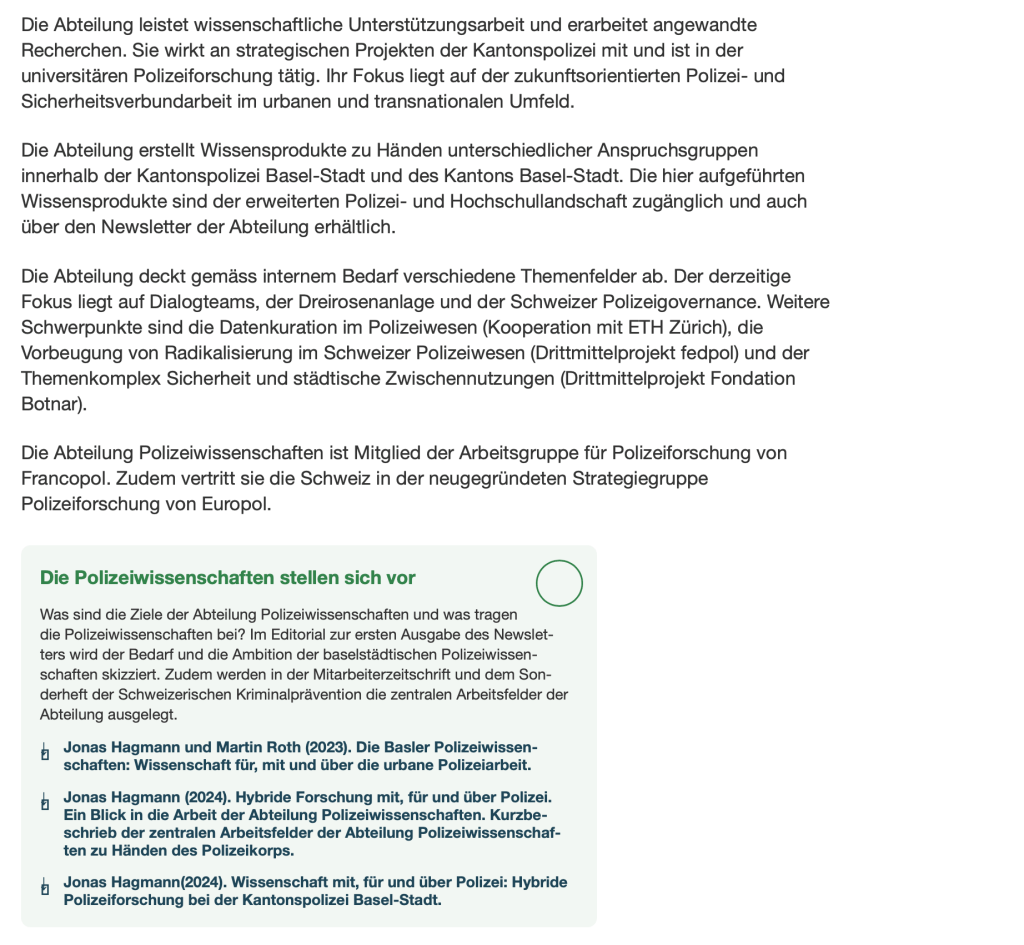
Die neugegründete Abteilung Polizeiwissenschaften fokussiert auf urbane, transnationale und zukunftsorientierte Polizeiarbeit im Verbund. Sie arbeitet sozialwissenschaftlich, vereint Wissensstände aus Polizeipraxis und Wissenschaft und erschafft unterschiedliche Wissensprodukte für, mit und über die Polizei.

Hagmann, Jonas; Roth, Martin (2023). Die Basler Polizeiwissenschaften: Wissenschaft für, mit und über die urbane Polizeiarbeit. Basel: Kantonspolizei Basel-Stadt, 2p. PDF
Staubli, Silvia; Grüninger, Anna; Hagmann, Jonas (2023). Benchmark « Hate Crimes »: Enregistrement des potentiels crimes de haine auprès des corps de police en Suisse, en Allemagne et en France. Basel: Kantonspolizei Basel-Stadt, 22p. PDF
Staubli, Silvia; Grüninger, Anna; Hagmann, Jonas (2023). Benchmark «Hate Crimes»: Erfassung von potentiellen Hassdelikten durch Polizeikorps in der Schweiz, in Deutschland und in Frankreich. Basel: Kantonspolizei Basel-Stadt, 22p. PDF
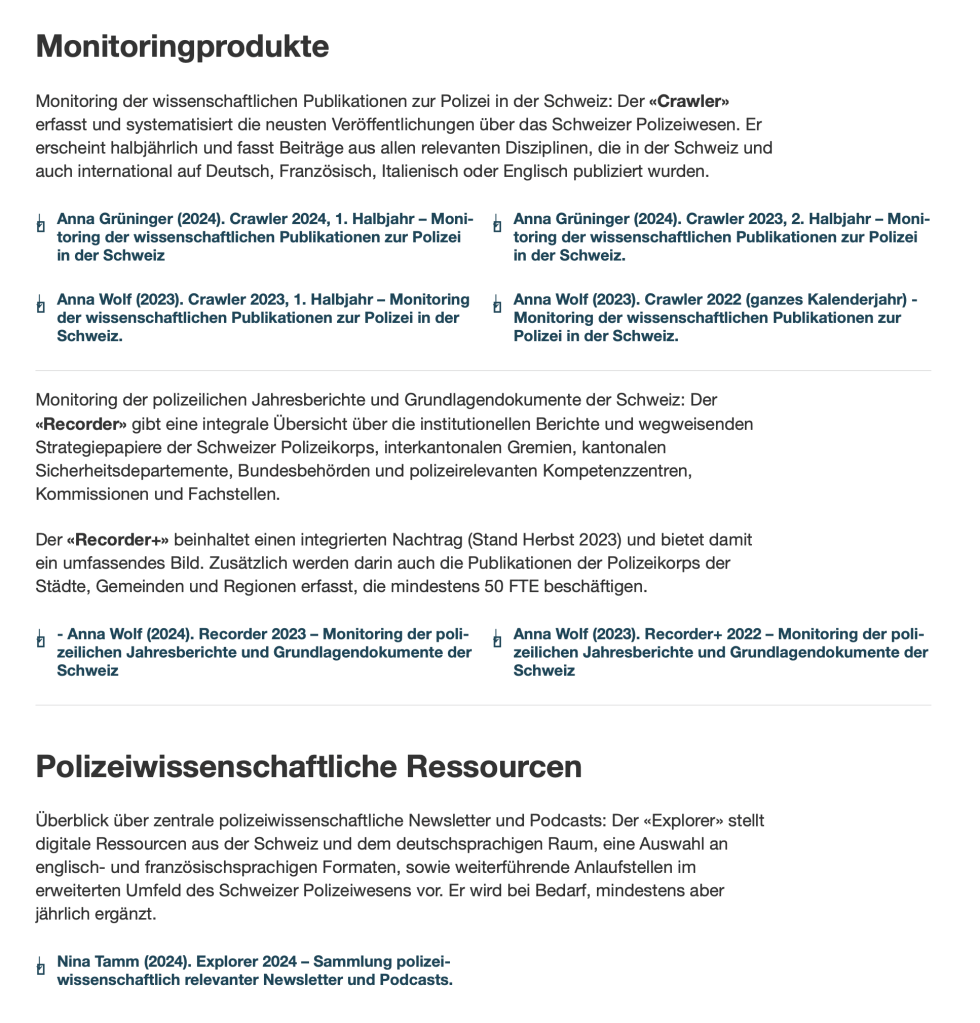
Wolf, Anna (2023). Crawler 2022 Monitoring der wissenschaftlichen Publikationen zur Polizei in der Schweiz. Basel: Kantonspolizei Basel-Stadt, 29p. PDF

 La sécurité est un objet de recherche protéiforme et mouvant par excellence, pour preuve l’incontournable entrée en matière l’évoquant en général comme un concept essentiellement contesté. Ainsi, aborder la question de l’ action de l’État en matière de sécurité renvoie à des univers sociaux et des pratiques extrêmement diverses. En mobilisant le concept de champ, ce chapitre propose de penser de manière relationnelle la production des savoirs sur l’(in)sécurité comme émanant d’un espace social autonome et dynamique généré par des agents pouvant être définis comme des professionnels de la gestion de la menace et des inquiétudes. Issue d’un projet de recherche financé par le Fonds national suisse de la recherche scientifique, la contribution a le double objectif de mobiliser la littérature existante sur le champ de la sécurité afin d’analyser les dynamiques contemporaines de sécurité en Suisse et de proposer des solutions pratiques pour tout chercheur souhaitant mener une analyse systématique de la sorte.

 It is generally accepted today that major international events – such as in 1914, 1945, 1989 or 2001 – contribute to guiding IR scholarship’s interests. But it remains poorly explored how, beyond substantive focus, transformative political events affect the academic field’s own working and organization. Whereas we know that global key moments (such as the end of the Cold War) were or are experienced differently by different societies, at the policy level, in terms of identity-construction and historiography, it remains to explore how such changes influence scholarly work in different higher education systems. Our article in International Studies Perspectives focuses on this link. It centers on the role of institutional factors in the conditioning of IR scholarship, which it sees as important yet under-explored intervening elements in the interrelation between political events and academic practice. The article defines the utility of such focus and illustrates it with casework centering on the end of the Cold War, and three central parties to the Cold War conflict – Russia as representative of the Eastern Bloc, Canada of the Western Alliance, and Switzerland as a Neutral polity. In doing so, the article showcases how institutional factors such as funding schemes, the marketization of education or creation of new IR departments operate as effective ‘hinges’, exerting significant influence over the ways scholars develop ideas about international relations.
 Contemporary security practices rarely represent new inventions – albeit change is important to it, the security politics of today often has a very long lineage. It adapts, reworks and sometimes just rehashes old ideas and practices of policing, and is embedded in deeply entrenched, historically grown and power-laden frameworks of collective, national, local or international sense- and decision-making. This contribution to Contemporanea‘s Special Section on the “History of Transnational Security Management in Europe” argues that is
  What does it take to safeguard a country like Switzerland? And is the national security system, which exudes certainty to those controlled by its agents, indeed as fortified as it appears? This essay chapter in Salvatore Vitale’s photographic visual study of 21st century statehood discusses the history and political sociology of the Swiss national security field. It lends a special eye to the the authorities capable of defining what security is or ought to be about, and asks whether the field has become more accessible and participatory in recent years.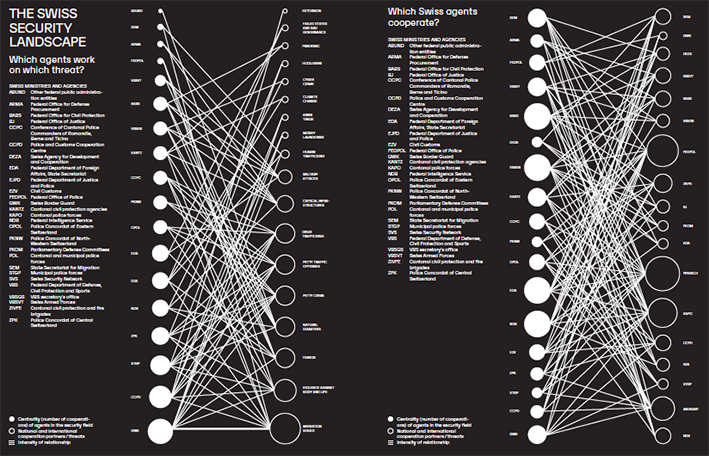
 ‘Security’ has for the most part been considered a special kind of politics by observers, as one that closes down inclusive policy-making and democratic debate. This Special Issue reviews theoretical and empirical developments at the intersections of ‘security’ and ‘politics’. It argues that research centering on the notion of politicization offers new ideas on how to addresses this complex and evolving conceptual tandem, and importantly, helps elucidate the growing range of actors, arenas and arguments factually visible in contemporary security affairs. The Special Issue develops a framework around the dimensions of controversy, mobilization and arena-shifting, and showcases the potential of such a perspective through empirical illustrations and theoretical examinations, covering issues such as post-Snowden public-policy controversy in Germany, lay participation in European security strategy-making, and the evolving role of the British parliament in UK security politics. The Special Issue’s ambition is to re-engage the relationship between security and politics, to inspire innovative new empirical work on ‘politics around security’, and to empower more differentiated inquiries into the ambivalent consequences of politicization.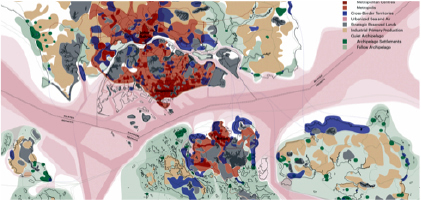
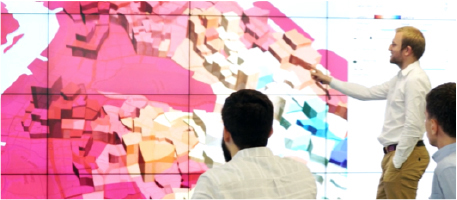
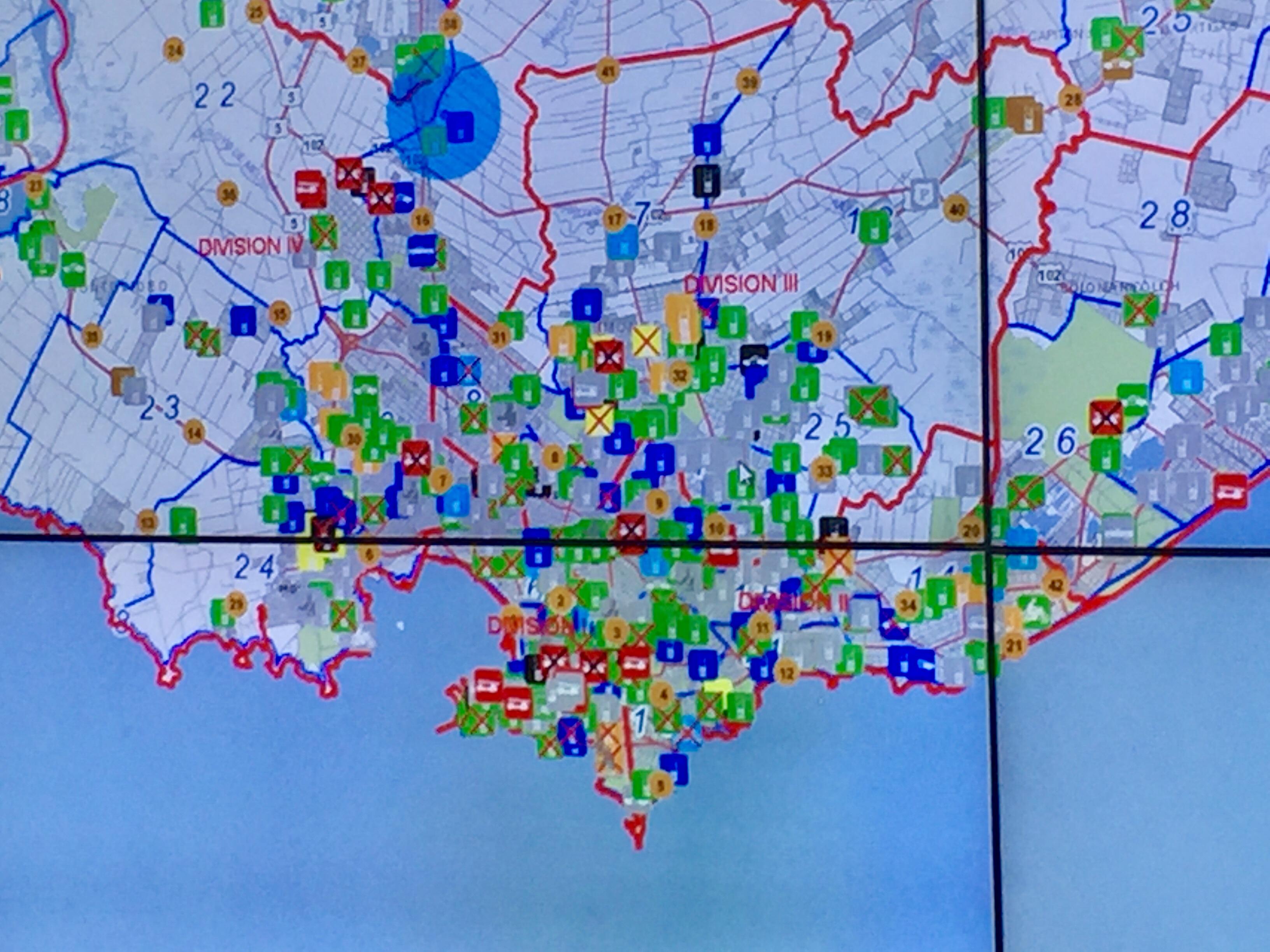


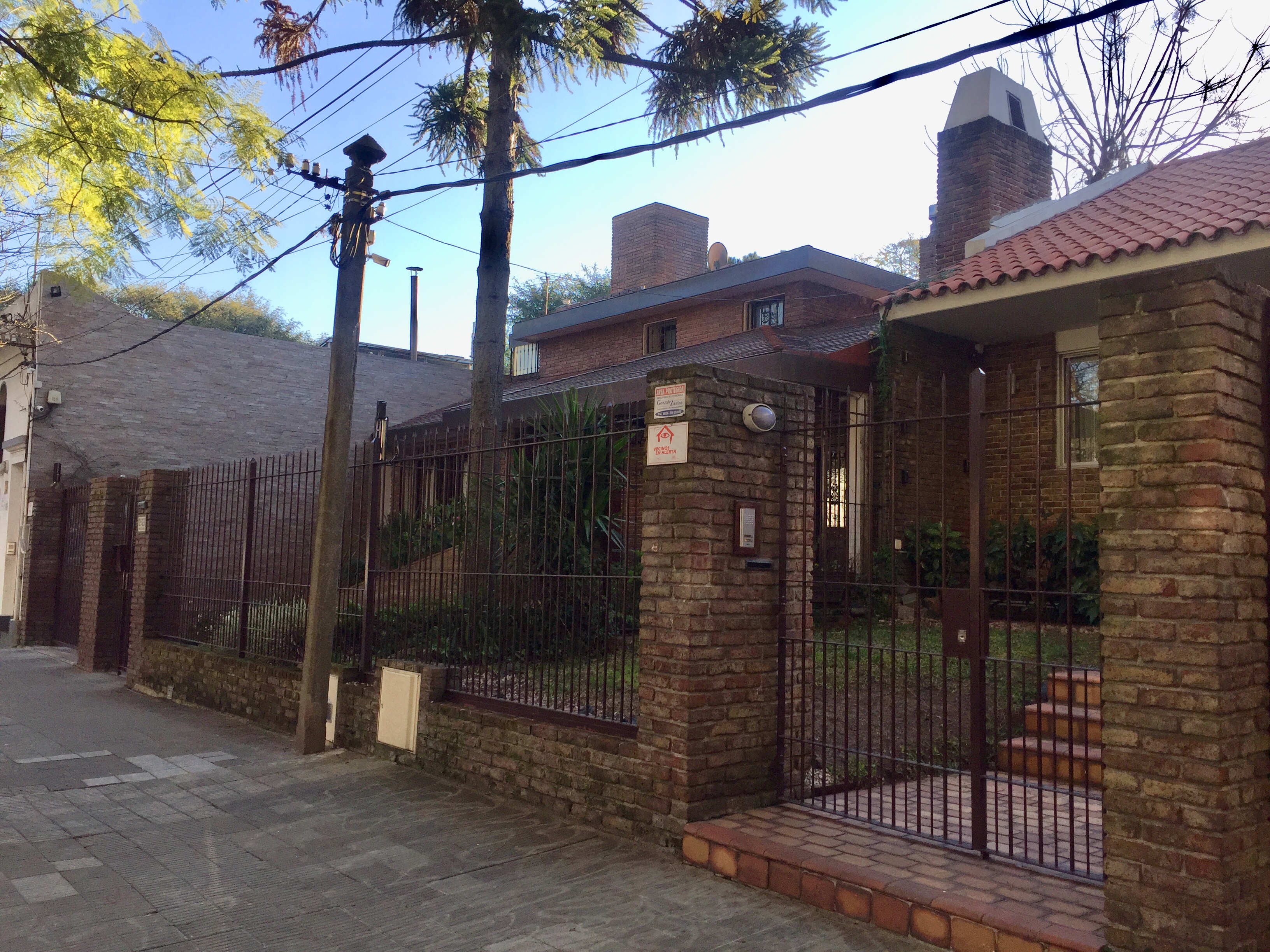

 It is widely known that national security fields changed considerably in the last decades. Different from the late Cold War years, when they focused on military threats, were closely orchestrated by Defence Ministries and contained few international contacts, national security ‘systems’ today handle wide sets of dangers, draw on complex casts of actors across levels of government, and often maintain working relations with multiple foreign partners. This comprehensive reconfiguration of national security fields is a central theme to security scholars and policymakers alike – but also difficult to pin down for methodological reasons. Written documentation on security agencies does not give precise indication of actual everyday inter-agency work practices, and assessments of nationwide security work across functions and levels of government are challenging by sheer questions of size. Adopting a practice-oriented approach to security research, this article draws on an unparalleled nationwide data collection effort to differentiate and map-out the Swiss security field’s programmatic and institutional evolution.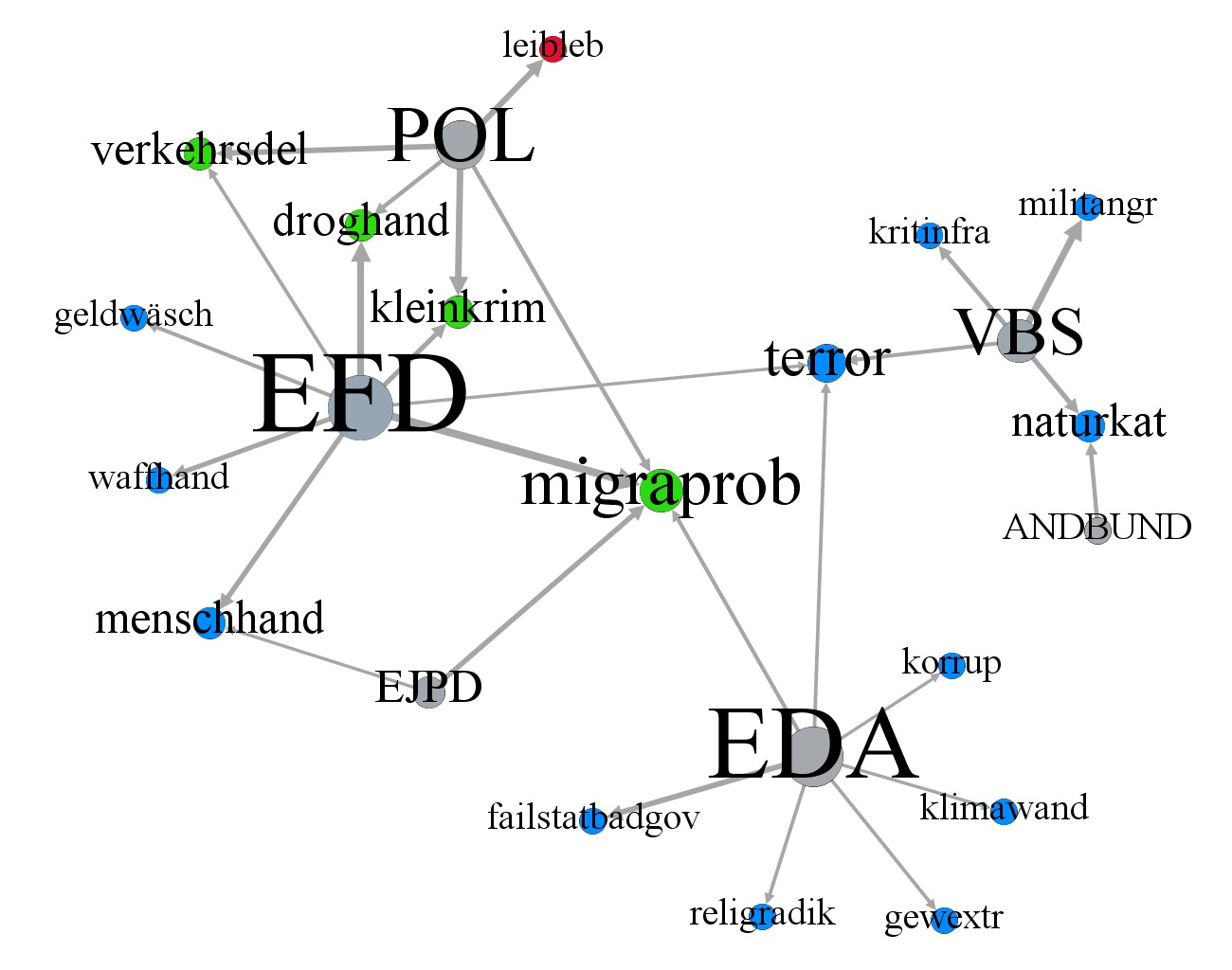

 :: Jonas Hagmann ::