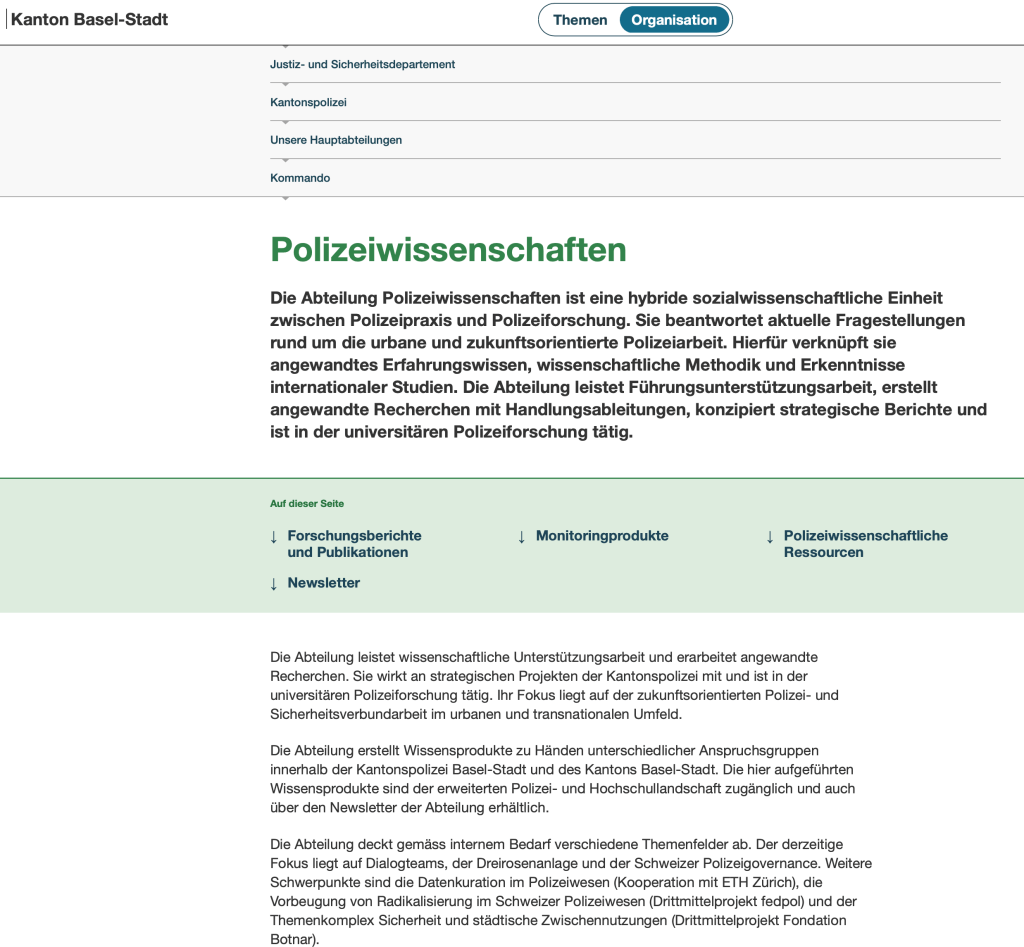
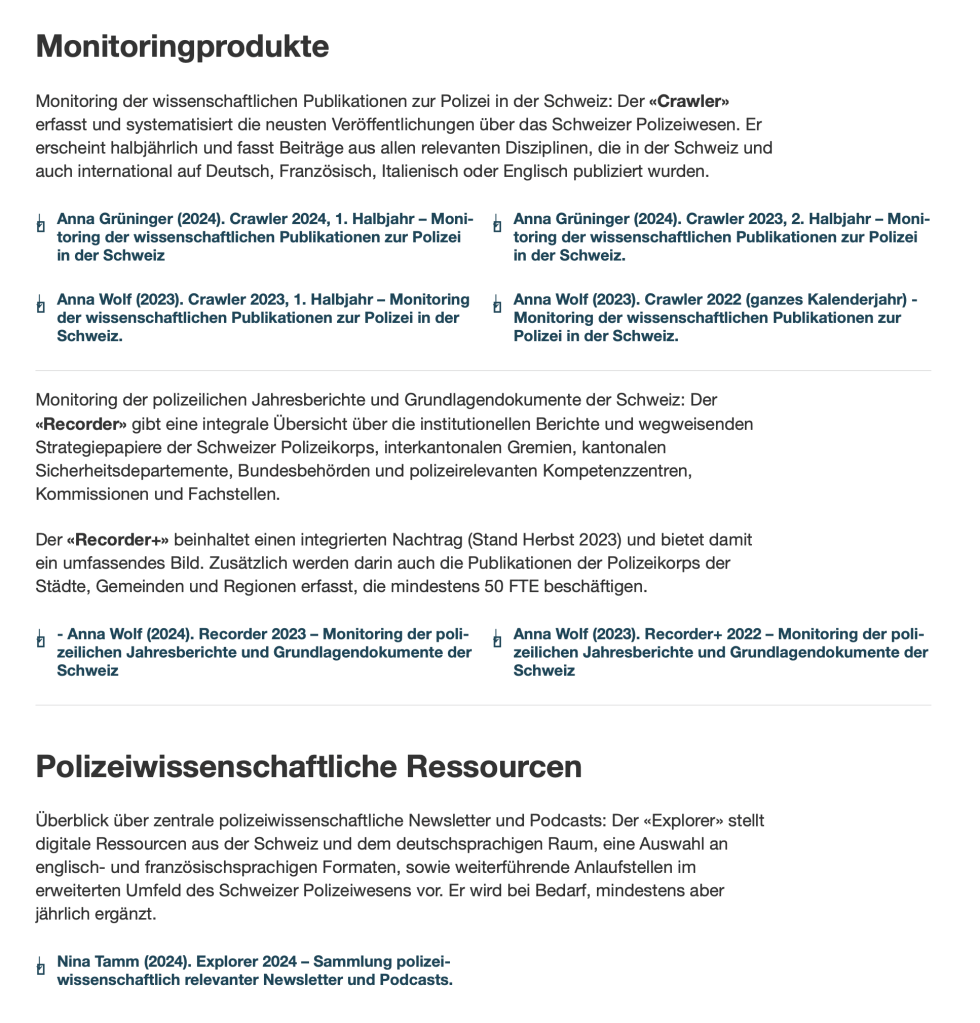
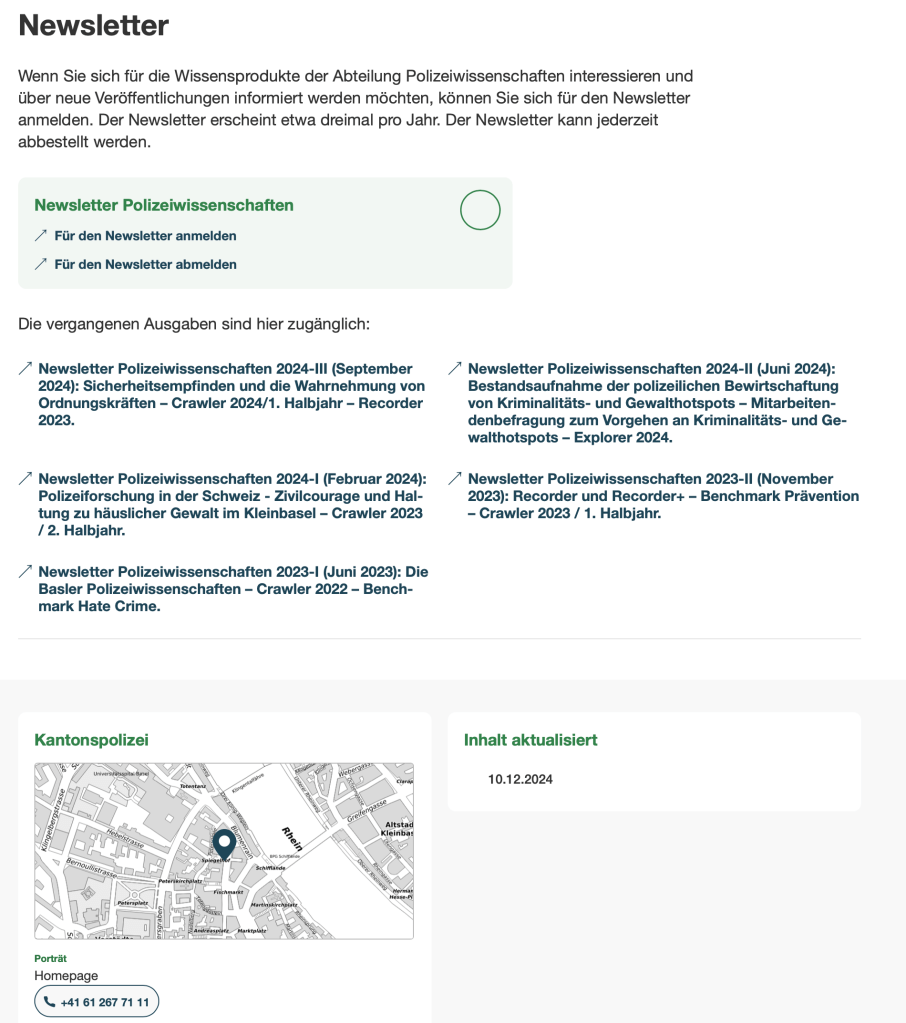
Die Abteilung Polizeiwissenschaften ist online gegangen, sie verfügt nun über eine eigene Website und einen Newsletter. Der Newsletter kann auf der Webseite abonniert werden und erscheint 3-4x jährlich.
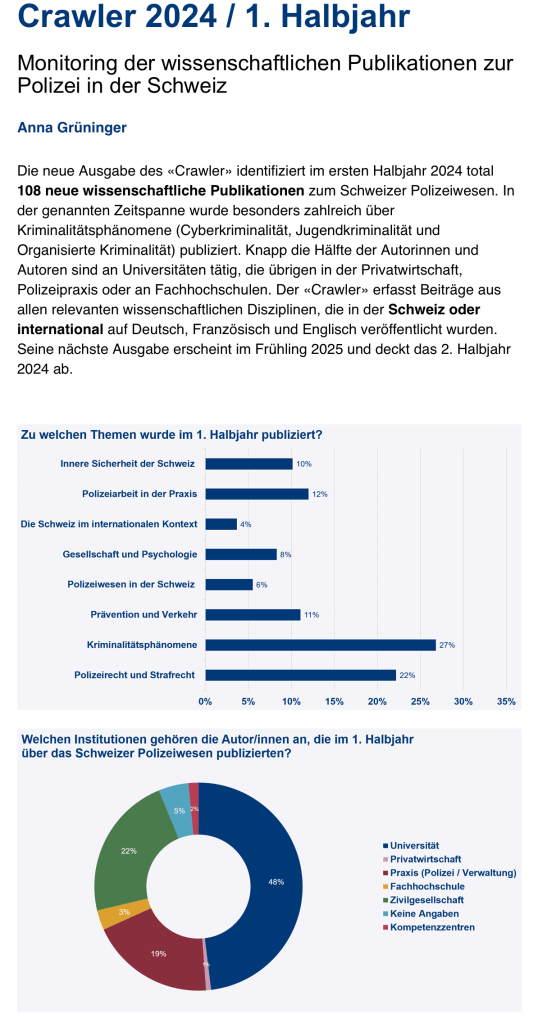
Die Erstausgabe beinhaltet eine Auslegung der Basler Polizeiwissenschaften, ein integrales Monitoring der wissenschaftlichen Publikationen über das Schweizer Polizeiwesen sowie ein Benchmark zum Thema Erfassung von «Hassdelikten» durch Schweizer Polizeikorps (letztere Studie auch in französischer Sprache).
Die neugegründete Abteilung Polizeiwissenschaften fokussiert auf urbane, transnationale und zukunftsorientierte Polizeiarbeit im Verbund. Sie arbeitet sozialwissenschaftlich, vereint Wissensstände aus Polizeipraxis und Wissenschaft und erschafft unterschiedliche Wissensprodukte für, mit und über die Polizei.

Hagmann, Jonas; Roth, Martin (2023). Die Basler Polizeiwissenschaften: Wissenschaft für, mit und über die urbane Polizeiarbeit. Basel: Kantonspolizei Basel-Stadt, 2p. PDF
Staubli, Silvia; Grüninger, Anna; Hagmann, Jonas (2023). Benchmark « Hate Crimes »: Enregistrement des potentiels crimes de haine auprès des corps de police en Suisse, en Allemagne et en France. Basel: Kantonspolizei Basel-Stadt, 22p. PDF
Staubli, Silvia; Grüninger, Anna; Hagmann, Jonas (2023). Benchmark «Hate Crimes»: Erfassung von potentiellen Hassdelikten durch Polizeikorps in der Schweiz, in Deutschland und in Frankreich. Basel: Kantonspolizei Basel-Stadt, 22p. PDF
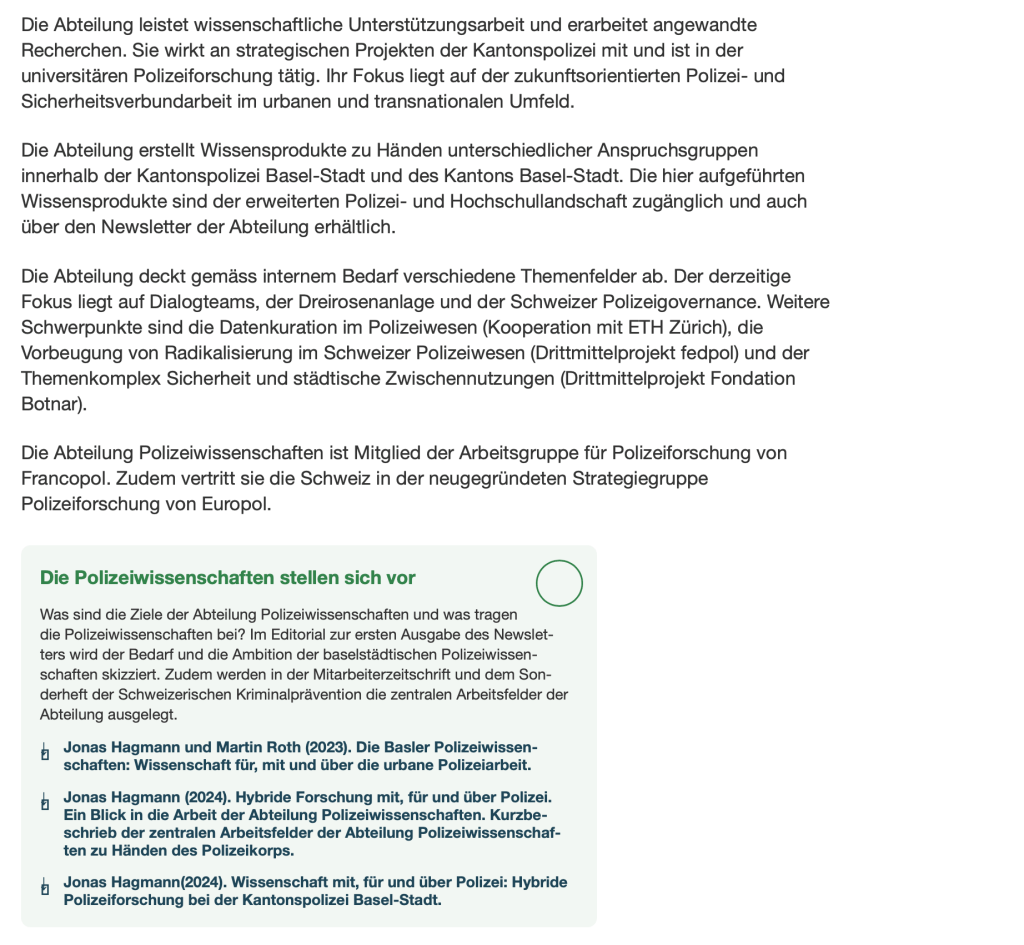
Wolf, Anna (2023). Crawler 2022 Monitoring der wissenschaftlichen Publikationen zur Polizei in der Schweiz. Basel: Kantonspolizei Basel-Stadt, 29p. PDF



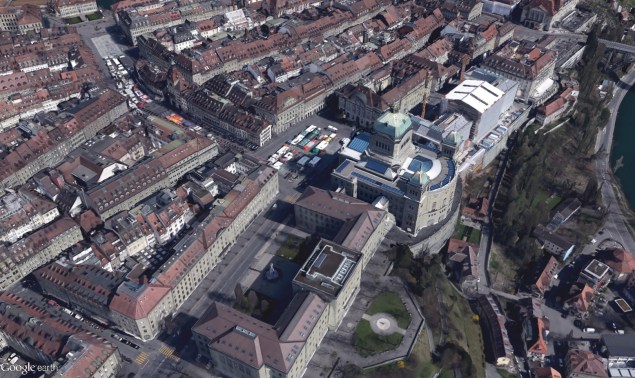
 What does it take to safeguard a country like Switzerland? And is the national security system, which exudes certainty to those controlled by its agents, indeed as fortified as it appears? This essay chapter in Salvatore Vitale’s photographic visual study of 21st century statehood discusses the history and political sociology of the Swiss national security field. It lends a special eye to the the authorities capable of defining what security is or ought to be about, and asks whether the field has become more accessible and participatory in recent years.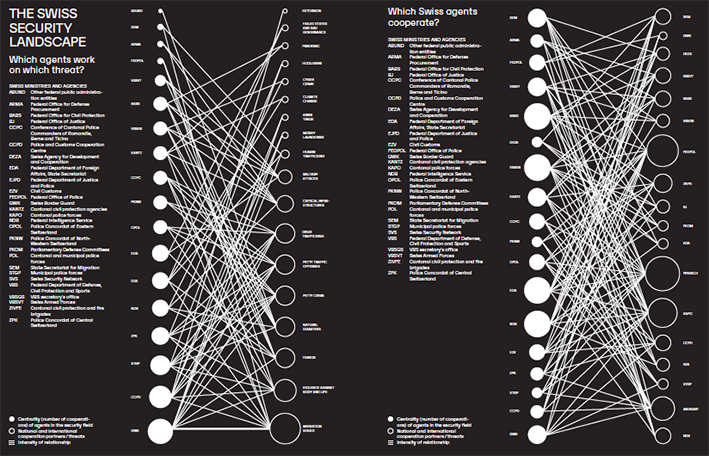



 It is widely known that national security fields changed considerably in the last decades. Different from the late Cold War years, when they focused on military threats, were closely orchestrated by Defence Ministries and contained few international contacts, national security ‘systems’ today handle wide sets of dangers, draw on complex casts of actors across levels of government, and often maintain working relations with multiple foreign partners. This comprehensive reconfiguration of national security fields is a central theme to security scholars and policymakers alike – but also difficult to pin down for methodological reasons. Written documentation on security agencies does not give precise indication of actual everyday inter-agency work practices, and assessments of nationwide security work across functions and levels of government are challenging by sheer questions of size. Adopting a practice-oriented approach to security research, this article draws on an unparalleled nationwide data collection effort to differentiate and map-out the Swiss security field’s programmatic and institutional evolution.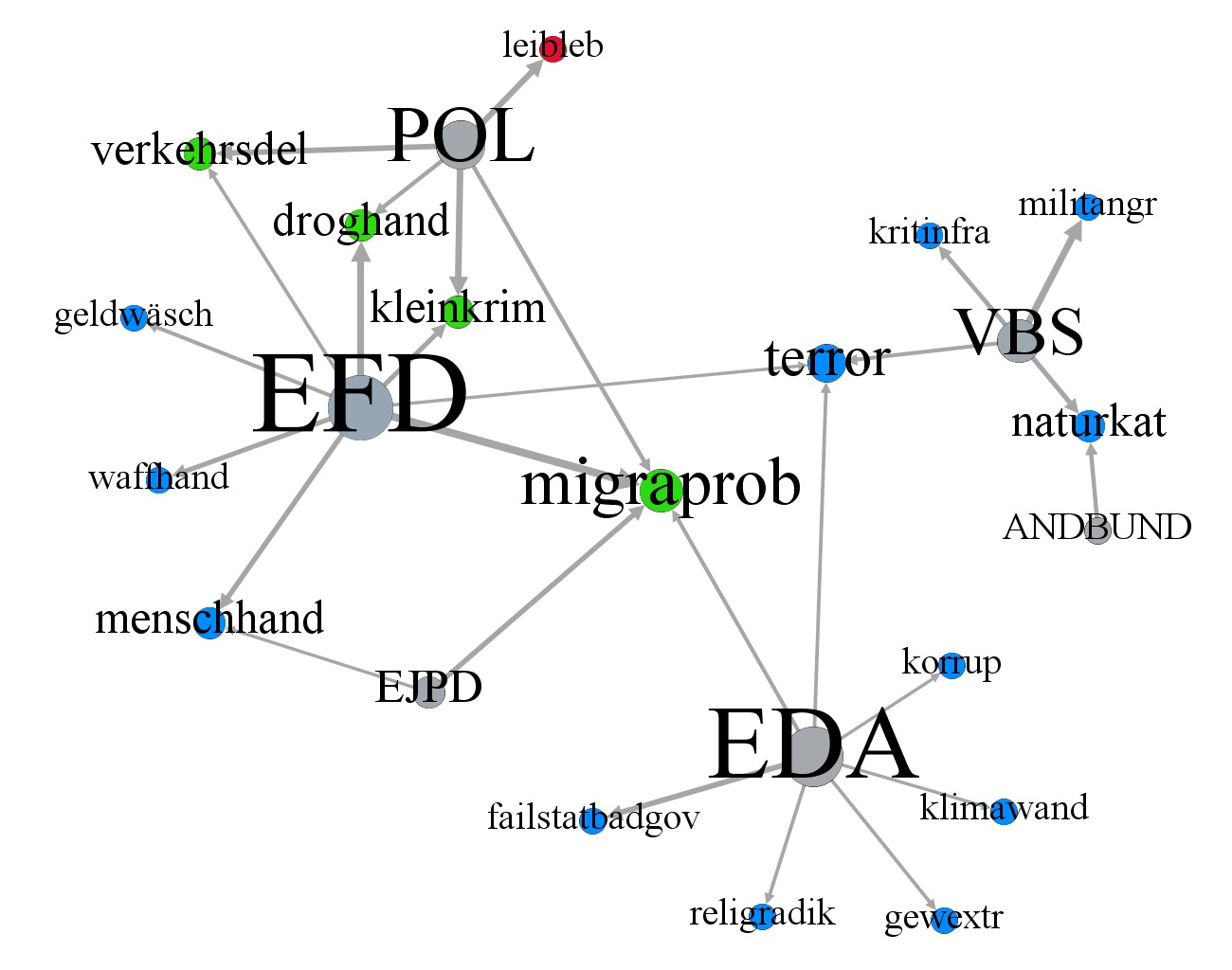








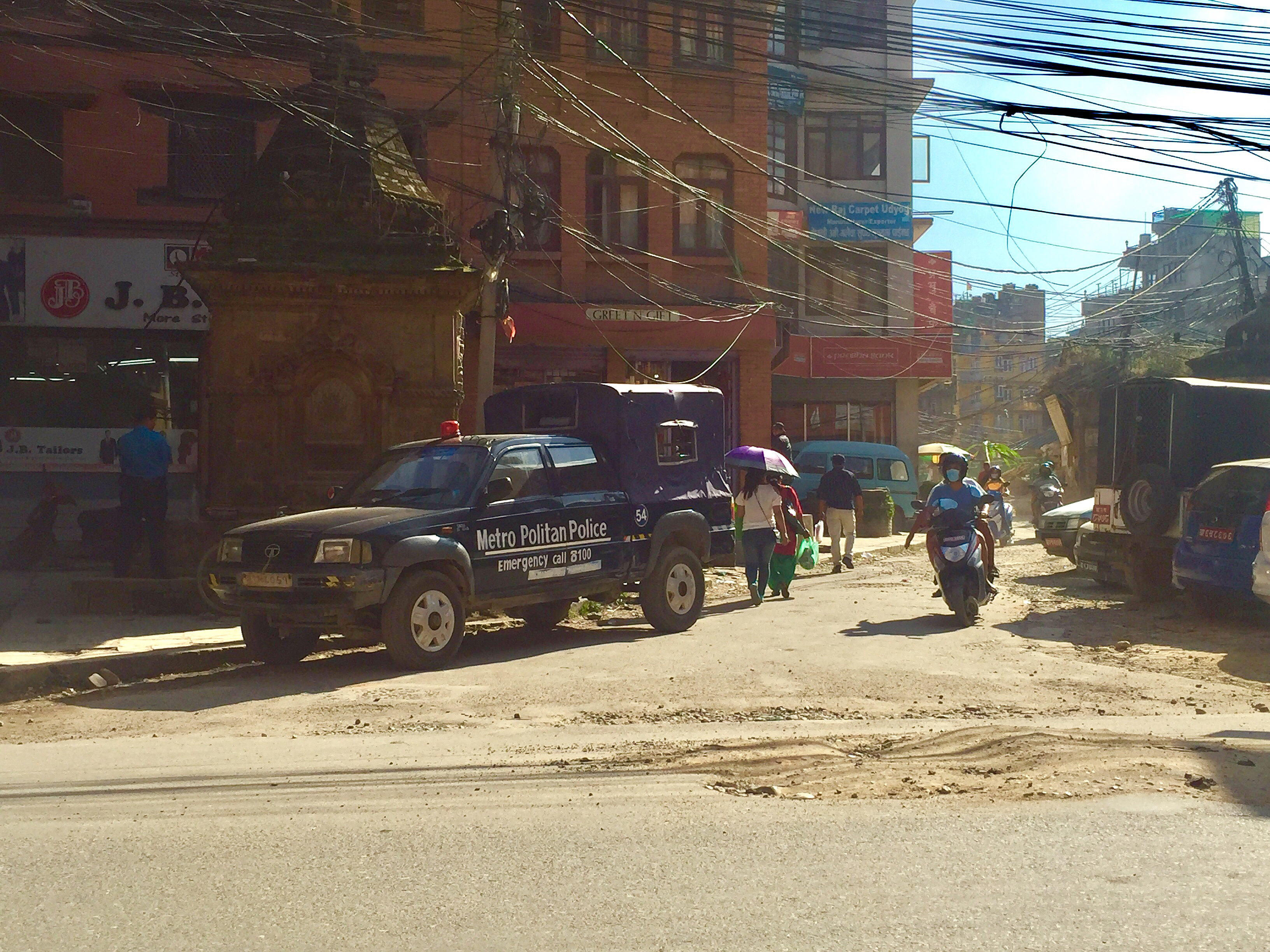
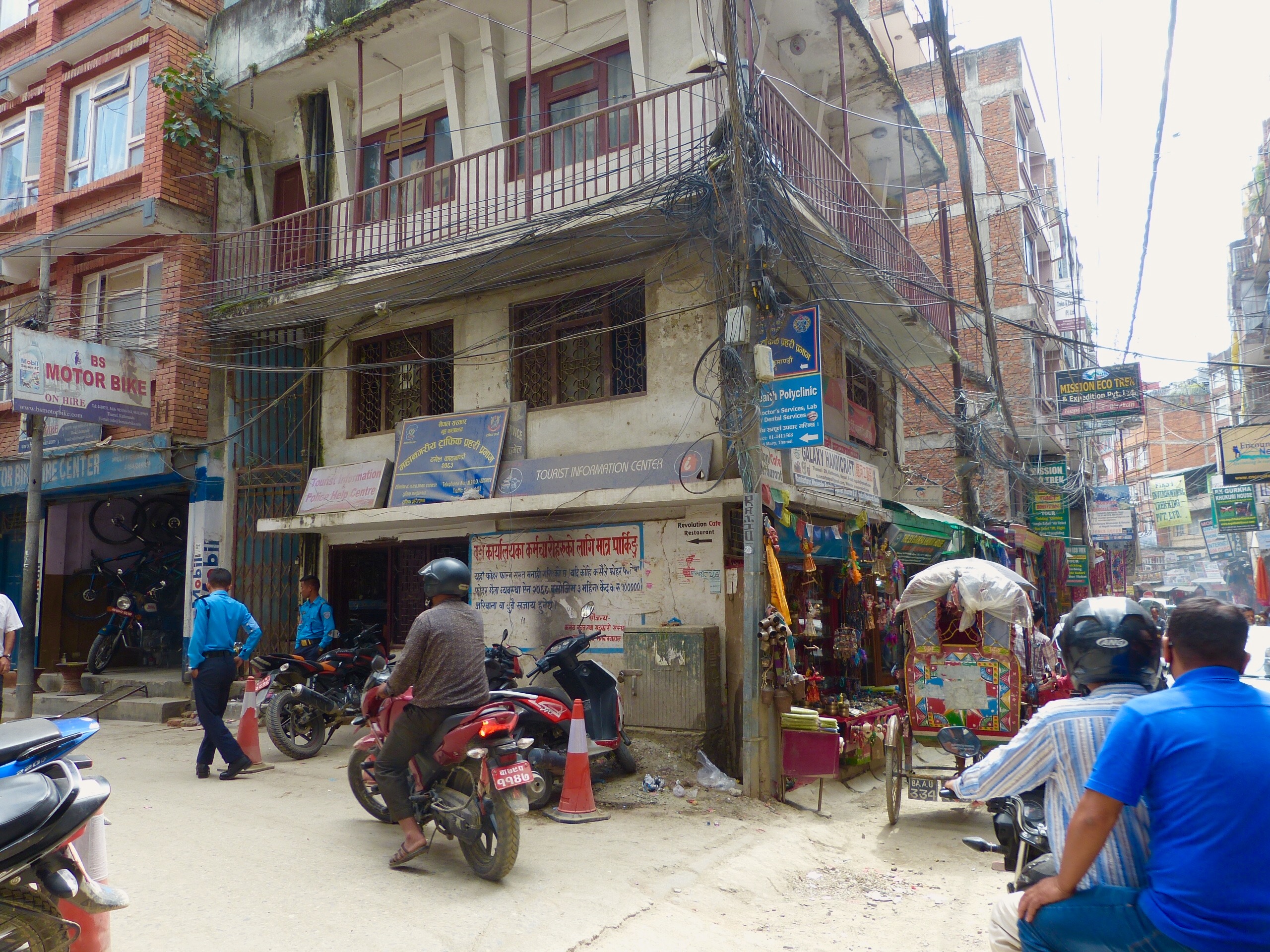 Thamel Police Station
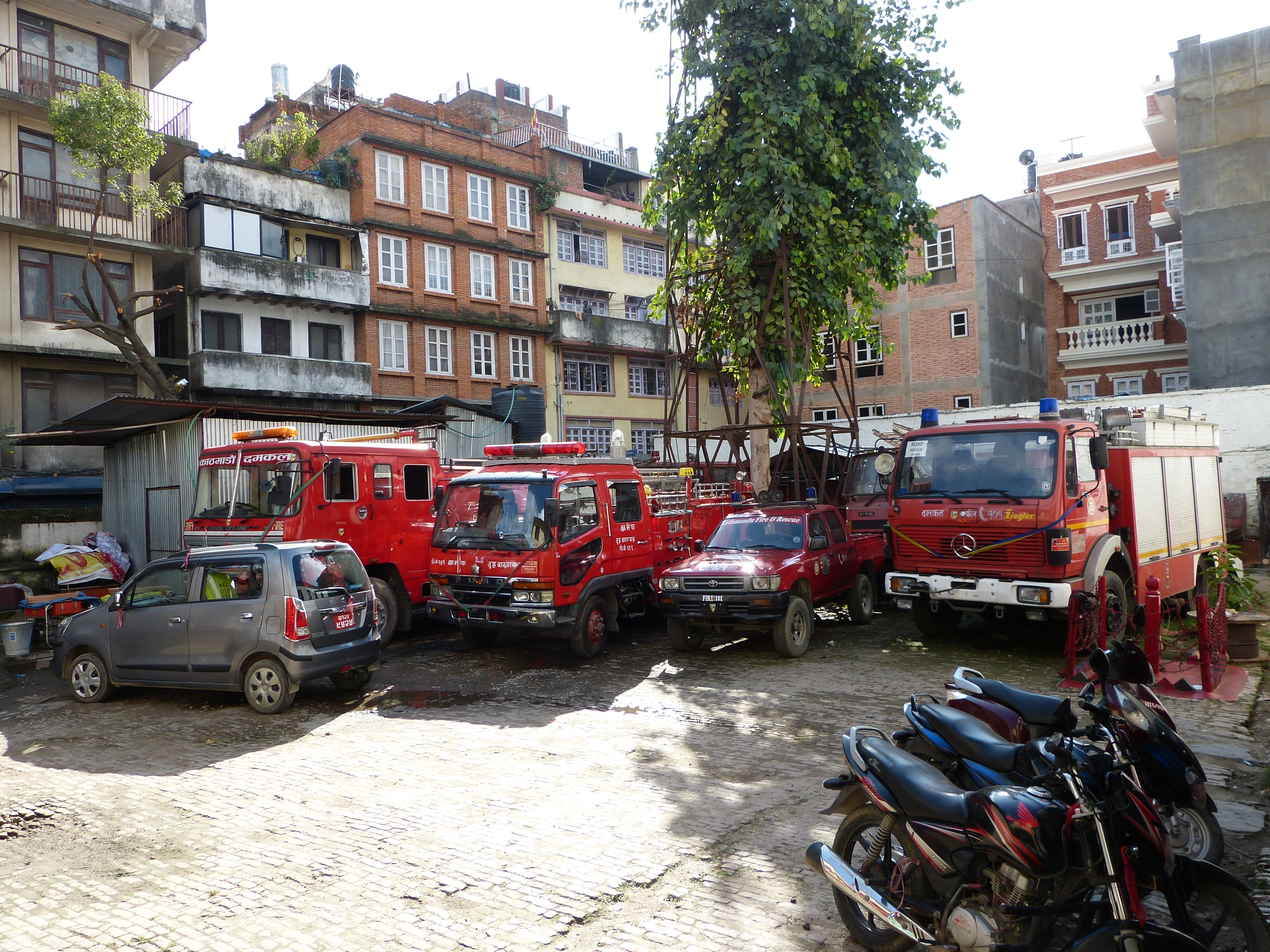 Juddha Barun Yantra Karyalaya (Kathmandu’s only fire station)
