 ‘Security’ has for the most part been considered a special kind of politics by observers, as one that closes down inclusive policy-making and democratic debate. This Special Issue reviews theoretical and empirical developments at the intersections of ‘security’ and ‘politics’. It argues that research centering on the notion of politicization offers new ideas on how to addresses this complex and evolving conceptual tandem, and importantly, helps elucidate the growing range of actors, arenas and arguments factually visible in contemporary security affairs. The Special Issue develops a framework around the dimensions of controversy, mobilization and arena-shifting, and showcases the potential of such a perspective through empirical illustrations and theoretical examinations, covering issues such as post-Snowden public-policy controversy in Germany, lay participation in European security strategy-making, and the evolving role of the British parliament in UK security politics. The Special Issue’s ambition is to re-engage the relationship between security and politics, to inspire innovative new empirical work on ‘politics around security’, and to empower more differentiated inquiries into the ambivalent consequences of politicization.
Hagmann, Jonas; Hegemann, Hendrik; Neal, Andrew (2018). The politicization of security: Controversy, mobilization, arena shifting . European Review of International Studies 5(3): 3-29. URL ToC
With contributions by Karin Aggestam, Annika Bergman Rosamond, Myriam Dunn Cavelty, Matthias Leese, Andrew Neal, Pinar Bilgin Fiona de Londras, Eric van Rythoven, Jonas Hagmann and Hendrik Hegemann.
The Special Issue was followed up in 2020 by a Review Forum with contributions by Linda Monsees, Mike Slaven, Akos Kopper, Andras Szalai and Stefan Kroll. See European Review of International Studies 7(1): 105-122. URL
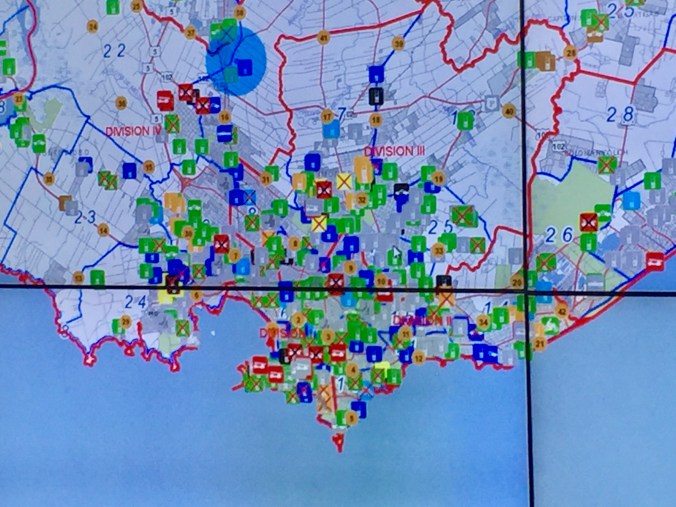




 It is widely known that national security fields changed considerably in the last decades. Different from the late Cold War years, when they focused on military threats, were closely orchestrated by Defence Ministries and contained few international contacts, national security ‘systems’ today handle wide sets of dangers, draw on complex casts of actors across levels of government, and often maintain working relations with multiple foreign partners. This comprehensive reconfiguration of national security fields is a central theme to security scholars and policymakers alike – but also difficult to pin down for methodological reasons. Written documentation on security agencies does not give precise indication of actual everyday inter-agency work practices, and assessments of nationwide security work across functions and levels of government are challenging by sheer questions of size. Adopting a practice-oriented approach to security research, this article draws on an unparalleled nationwide data collection effort to differentiate and map-out the Swiss security field’s programmatic and institutional evolution.















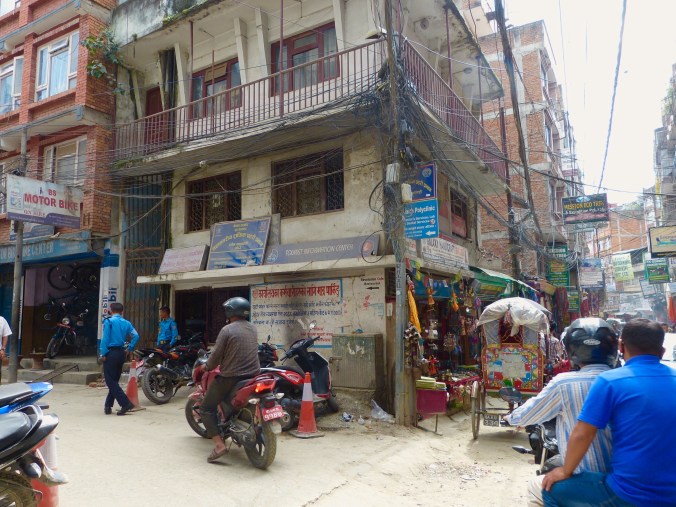 Thamel Police Station
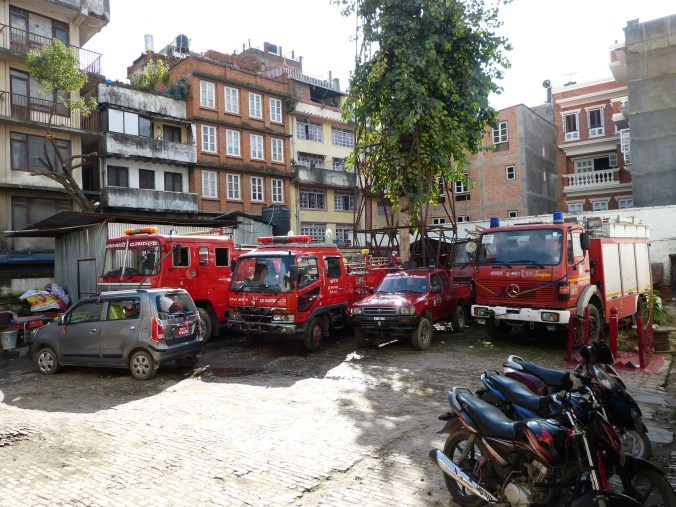 Juddha Barun Yantra Karyalaya (Kathmandu’s only fire station)
 :: Jonas Hagmann ::