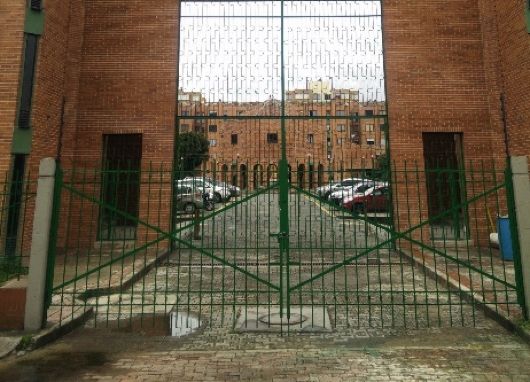
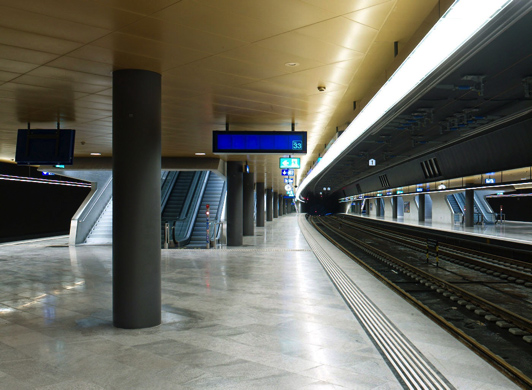
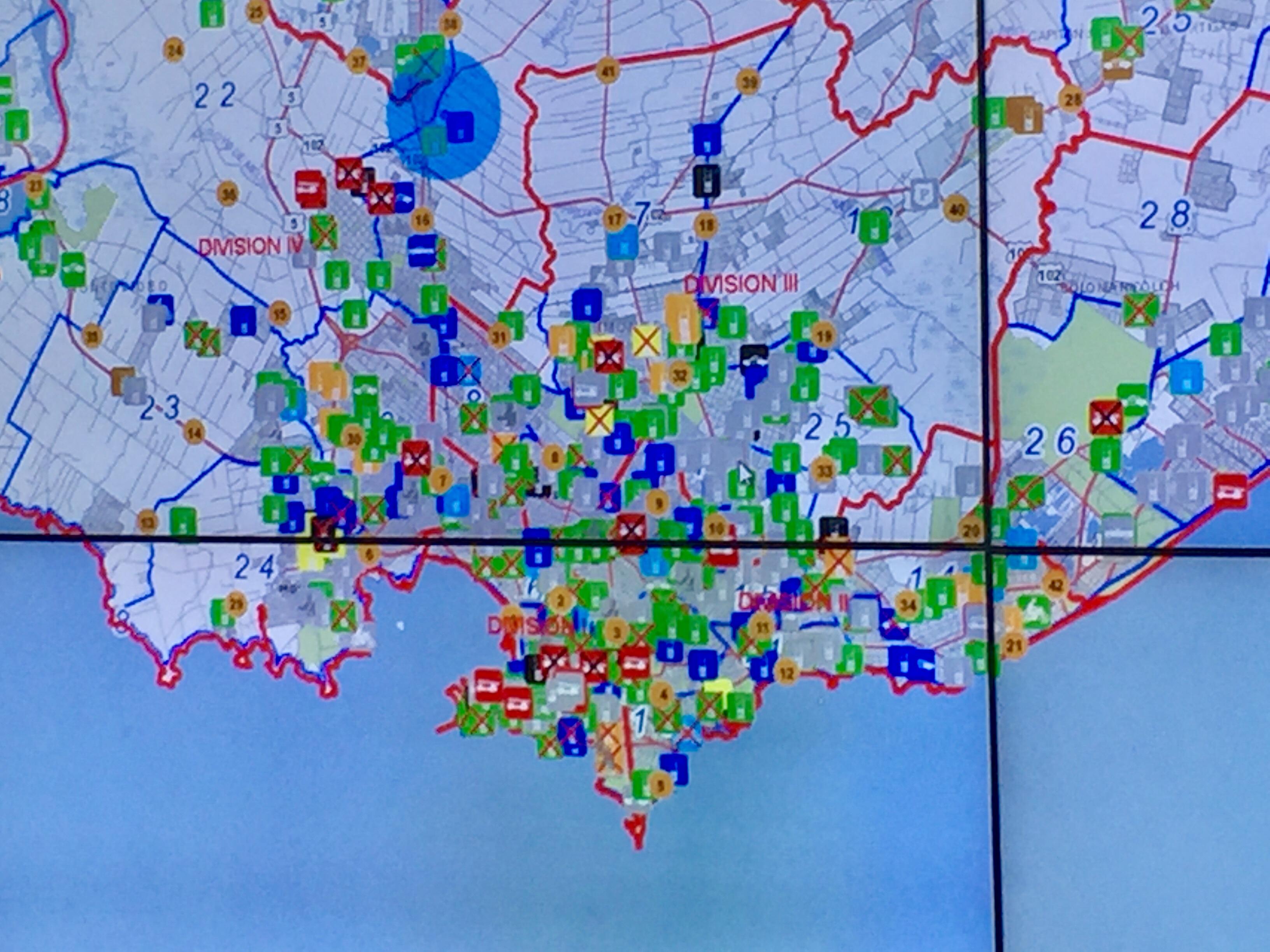
 Urban design is increasingly widely used for city-oriented security production, and thus becomes included into the latter’s complex politics of in- and exclusion. This contribution showcases how urban design becomes deployed as a technology of security both internationally and in Switzerland, and how a reflexive security studies perspective on this use offers productive new research avenues. This is because the focus on urban design allows asking in new ways whether ‘more security is better’, how technological interventions are used and appropriated, and how they reconfigure democratic processes. Security research drawing on reflexive IR and security studies is well placed to this endeavour, as it proposes integrative and dialectical analyses of how built environments may be empowering/disempowering and inclusive/exclusive. The contribution sets out the specificities of this research ontology, presents urban design’s operation as technology of security politics, and illustrates said link in two mini-case studies centring in Bogotá and Zürich. In line with the special section to which it contributes, the article seeks to familiarize readers with architecture-oriented political analysis, and to draw out main lines of further investigation.

Hagmann, Jonas; Kostenwein, David (2021). Urban design as technology of (counter-) democratic security politics. Swiss Political Science Review 27(1): 193-204. PDF
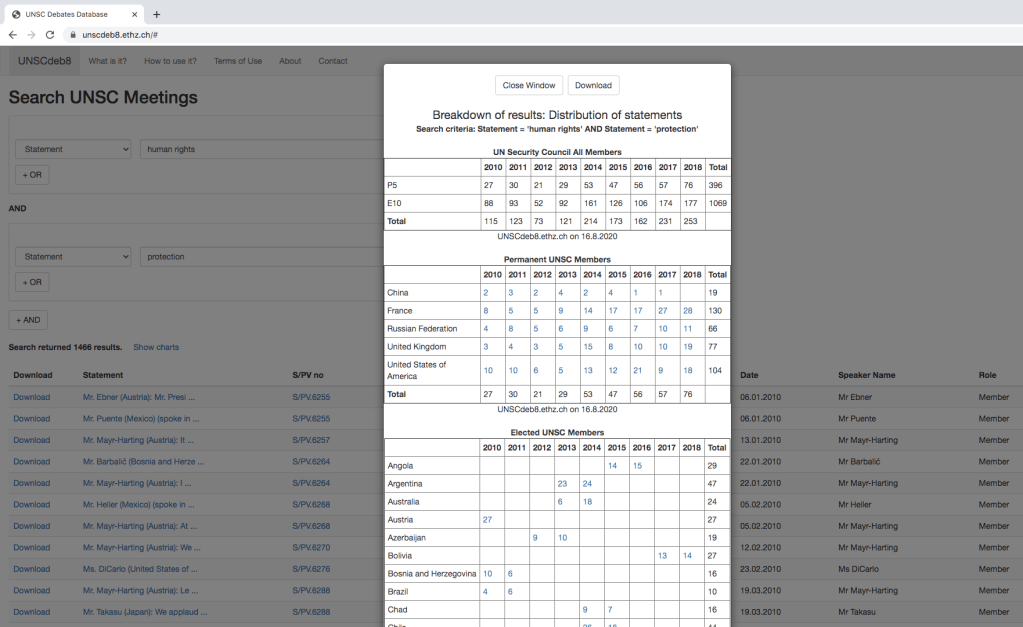



 It is generally accepted today that major international events – such as in 1914, 1945, 1989 or 2001 – contribute to guiding IR scholarship’s interests. But it remains poorly explored how, beyond substantive focus, transformative political events affect the academic field’s own working and organization. Whereas we know that global key moments (such as the end of the Cold War) were or are experienced differently by different societies, at the policy level, in terms of identity-construction and historiography, it remains to explore how such changes influence scholarly work in different higher education systems. Our article in International Studies Perspectives focuses on this link. It centers on the role of institutional factors in the conditioning of IR scholarship, which it sees as important yet under-explored intervening elements in the interrelation between political events and academic practice. The article defines the utility of such focus and illustrates it with casework centering on the end of the Cold War, and three central parties to the Cold War conflict – Russia as representative of the Eastern Bloc, Canada of the Western Alliance, and Switzerland as a Neutral polity. In doing so, the article showcases how institutional factors such as funding schemes, the marketization of education or creation of new IR departments operate as effective ‘hinges’, exerting significant influence over the ways scholars develop ideas about international relations.
 Contemporary security practices rarely represent new inventions – albeit change is important to it, the security politics of today often has a very long lineage. It adapts, reworks and sometimes just rehashes old ideas and practices of policing, and is embedded in deeply entrenched, historically grown and power-laden frameworks of collective, national, local or international sense- and decision-making. This contribution to Contemporanea‘s Special Section on the “History of Transnational Security Management in Europe” argues that is
  What does it take to safeguard a country like Switzerland? And is the national security system, which exudes certainty to those controlled by its agents, indeed as fortified as it appears? This essay chapter in Salvatore Vitale’s photographic visual study of 21st century statehood discusses the history and political sociology of the Swiss national security field. It lends a special eye to the the authorities capable of defining what security is or ought to be about, and asks whether the field has become more accessible and participatory in recent years.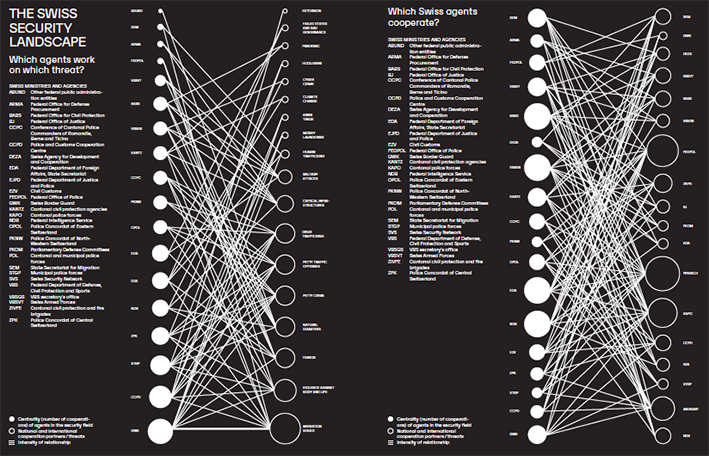
 ‘Security’ has for the most part been considered a special kind of politics by observers, as one that closes down inclusive policy-making and democratic debate. This Special Issue reviews theoretical and empirical developments at the intersections of ‘security’ and ‘politics’. It argues that research centering on the notion of politicization offers new ideas on how to addresses this complex and evolving conceptual tandem, and importantly, helps elucidate the growing range of actors, arenas and arguments factually visible in contemporary security affairs. The Special Issue develops a framework around the dimensions of controversy, mobilization and arena-shifting, and showcases the potential of such a perspective through empirical illustrations and theoretical examinations, covering issues such as post-Snowden public-policy controversy in Germany, lay participation in European security strategy-making, and the evolving role of the British parliament in UK security politics. The Special Issue’s ambition is to re-engage the relationship between security and politics, to inspire innovative new empirical work on ‘politics around security’, and to empower more differentiated inquiries into the ambivalent consequences of politicization.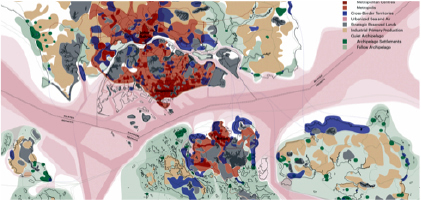




 :: Jonas Hagmann ::