The security domain relies on a heterogeneous set of professionals, ranging from government leaders to parliamentarians, bureaucrats and, of course, innumerable operational actors – such as the police, the armed forces, civil protection, the intelligence services, and social workers. In an extended view, also private actors, transnational networks and civil society groups – even individuals – have roles to play in the design and implementation of security practices.
The detection and prevention of radicalization within Swiss police forces
 The detection, handling and prevention of radicalisation within security services is increasingly the subject of international research. However, how police organisations themselves classify and handle the issue remains poorly understood. Based on a qualitative survey of executives from the Swiss police forces, this article provides empirical insights into this practical knowledge. It supplements the current state of research with the institutional handling of radicalisation phenomena in the police sector and formulates further research questions based on this.
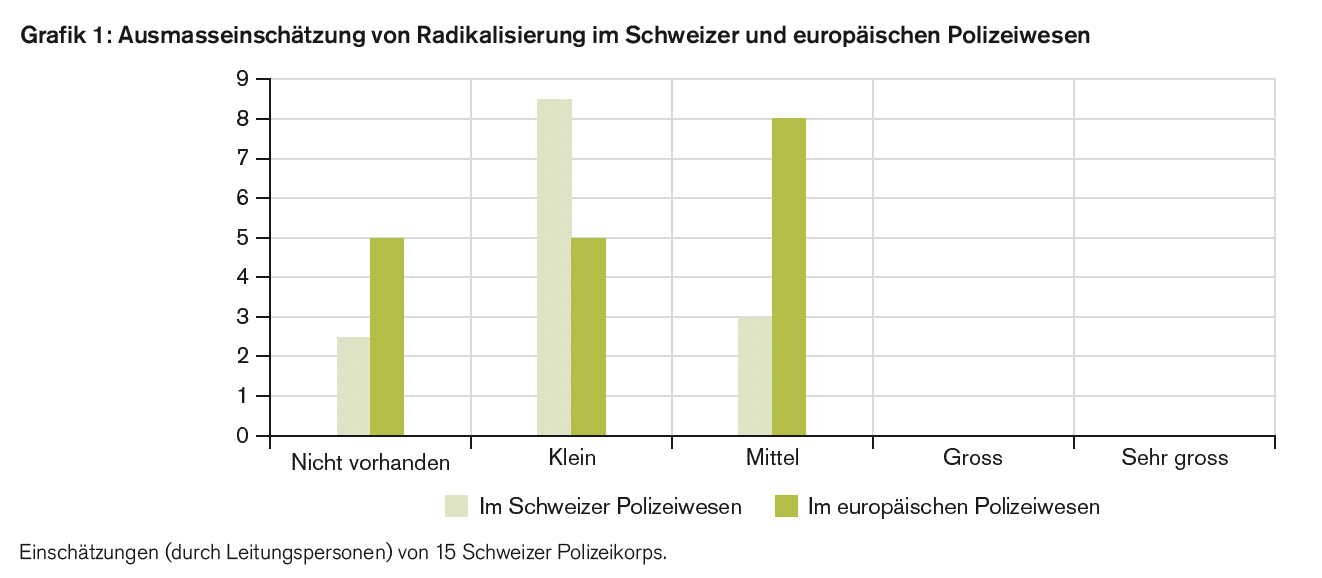
Hagmann, Jonas; Staubli, Silvia; Gaia, Elisa (2025). Radikalisierung im Schweizer Polizeiwesen: Einordnung von Leitungspersonen aus der Polizeipraxis. Neue Zeitschrift für Kriminologie und Kriminalpolitik – NKrim/NCrim. 2/2025: 48-60. PDF
Subnational security politics: How do cantonal parliaments engage the police?
 In Switzerland, the police sector is first and foremost a cantonal and thus subnational policy domain. Because of this scale’s complexity, political debates surrounding policing in Switzerland are still largely under-researched in Swiss security studies today. A new empirical snapshot analysis sheds light on how members of the cantonal parliaments engage with policing matters. The findings reveal varying degrees of parliamentary activity and a wide thematic range in their dealings with police issues — coupled with a notable reluctance to employ the most powerful parliamentary tools.
Grüninger, Anna; Hagmann, Jonas (2025). Umstrittene Polizei: Wie sich die Kantonsparlamente mit dem Polizeiwesen befassen / Comment les parlements cantonaux traitent-ils la police? / Controversial police: How the cantonal parliaments deal with policing. DeFacto. 24 September/27 October. PDF DE / PDF FR / PDF EN
Radicalized police officers: A systematic analysis of media reporting 2010-2024
 How is the public informed about cases of radicalization within Swiss police forces? A systematic analysis of all media reports published between 2010 and 2024 reveals 20 such cases for all of Switzerland, distributed across 11 individual police corps. The majority of the cases identified – i.e., on which the media reported – concern uses or public displays of extremist symbols, particularly on social media. Fifteen cases are linked to right-wing extremism, three to conspiracy theories (including COVID-19), and two to Islamist extremism. The study finds significant variation in terms of how the Swiss media reports on such cases, both in terms of quantity and depth. Some incidents receive widespread media attention, but others go largely unnoticed. Overall, press articles are dominated by agency-like reports and brief news items. In-depth journalistic investigation and contextual analysis for the benefit of the public are rare.

Staubli, Silvia; Tamm, Nina; Gaia, Elisa; Hagmann, Jonas (2025). Radikalisierung im Schweizer Polizeiwesen: Medienanalyse liefert erste Erkenntnisse. Kriminalistik 10/2025: 567-570. PDF
Police reporting practices: From facts to data
 The digital transformation of police work, and with it novel analytical ambitions regarding police data, affects the ways in which police organizations produce knowledge and act upon it. Based on qualitative empirical field research in a Swiss police department, the contribution shows how traditional forms of reporting are reconfigured by new analytical use-cases for the reported data. The analysis foregrounds how frontline officers navigate novel data requirements in their everyday work practice, leading to a re-evaluation of police work between “craft” and “science.”
Hagmann, Jonas; Leese, Matthias (2024). Vom Sachverhalt zum Datengehalt: Polizeiliche Rapportierungspraxis zwischen Einzelfall und Aggregatebene. Kriminologisches Journal 56(3): 177-194. PDF
National security as a professional ‘field of force’: The case of Switzerland
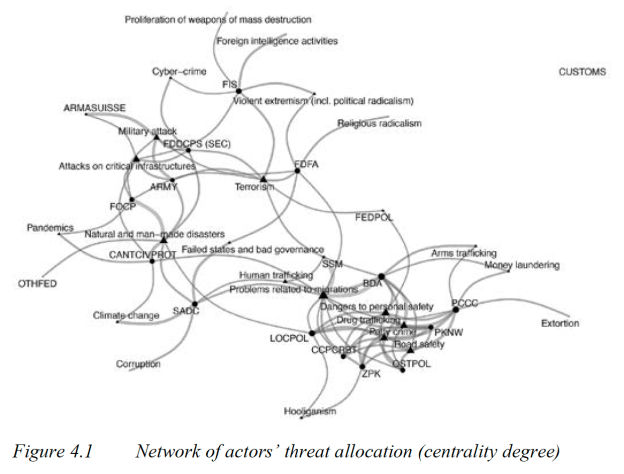
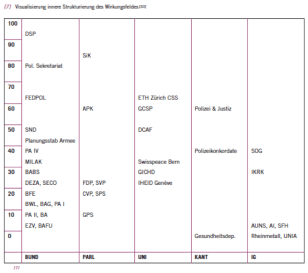
 National security policy defies easy analysis. State action in the security domain is extraordinarily diverse and wide-ranging, stretching from defense and diplomacy to civil protection, public order and social security. As a result, conventional differentiations – such as between internal and external security, police and military, or public and private security production – became outdated and do not provide sufficient analytical to understand how the national security is configured and evolving. Bourdieu’s field theory is one useful way to better capture the complexity of the national security domain. In its view, the numerous specialists active in the domain form a larger professional space, whose inner workings are co-determined by positions, knowledges, individual skills and professional practices that may themselves be competing with one another. The chapter sets out this understanding and offers a deep empirical account of the Swiss national security field’s (re-)configuration in the 2010s. It shows what actors worked on what kind of security challenge(s) and in collaboration with whom, and it charts the forms of ‘capital’ (education, professional experiences, military ranks etc.) on which these practices were drawing.
Davidshofer, Stephan; Tawfik, Amal; Hagmann, Jonas (2024). Security as a field of force: the case of Switzerland in the mid-2010s. In: Dubois, Vincent (ed.). Bringing Bourdieu’s Theory of Fields to Critical Policy Analysis, pp. 74-89. Cheltenham: Edward Elgar. PDF
La politique de sécurité comme produit du rapport de forces au sein du champ
 La sécurité est un objet de recherche protéiforme et mouvant par excellence, pour preuve l’incontournable entrée en matière l’évoquant en général comme un concept essentiellement contesté. Ainsi, aborder la question de l’ action de l’État en matière de sécurité renvoie à des univers sociaux et des pratiques extrêmement diverses. En mobilisant le concept de champ, ce chapitre propose de penser de manière relationnelle la production des savoirs sur l’(in)sécurité comme émanant d’un espace social autonome et dynamique généré par des agents pouvant être définis comme des professionnels de la gestion de la menace et des inquiétudes. Issue d’un projet de recherche financé par le Fonds national suisse de la recherche scientifique, la contribution a le double objectif de mobiliser la littérature existante sur le champ de la sécurité afin d’analyser les dynamiques contemporaines de sécurité en Suisse et de proposer des solutions pratiques pour tout chercheur souhaitant mener une analyse systématique de la sorte.
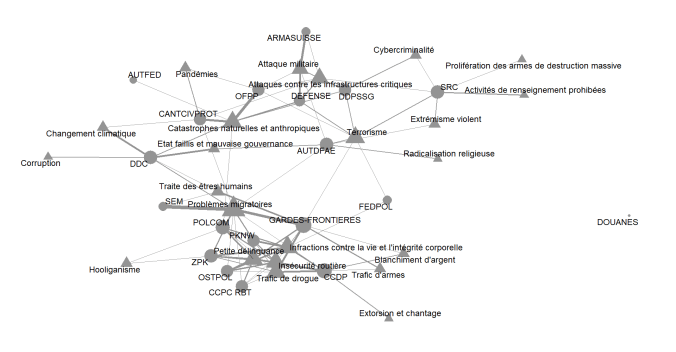 Graphique 1 : Menaces selon les acteurs (centralité de degré)
Davidshofer, Stephan; Tawfik, Amal; Hagmann, Jonas (2023). La politique de sécurité comme produit du rapport de forces au sein du champ. Le cas de la Suisse au milieu des années 2010. In: Dubois, Vincent (ed.). Les structures sociales de l’action publique : Analyser les politiques publiques avec la sociologie des champs, pp127-163. Paris: Editions du Croquant. PDF
Making Switzerland secure, making security Swiss
 What does it take to safeguard a country like Switzerland? And is the national security system, which exudes certainty to those controlled by its agents, indeed as fortified as it appears? This essay chapter in Salvatore Vitale’s photographic visual study of 21st century statehood discusses the history and political sociology of the Swiss national security field. It lends a special eye to the the authorities capable of defining what security is or ought to be about, and asks whether the field has become more accessible and participatory in recent years.
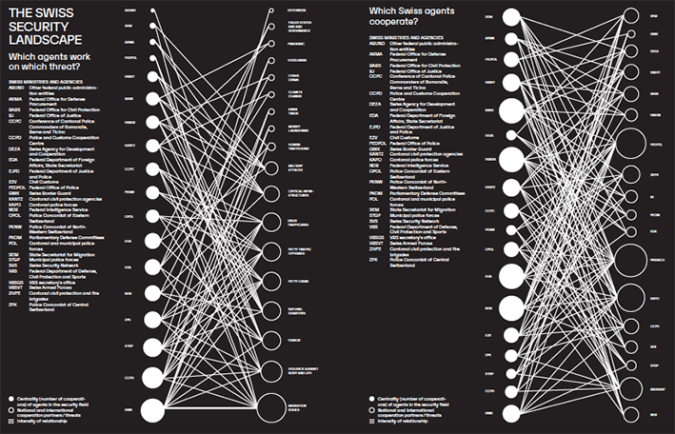
Hagmann, Jonas (2019). Making Switzerland secure, making security Swiss. In: Vitale, Salvatore (ed.). How to Secure a Country, pp261-265. Zürich: Lars Müller Publishers. PDF
The programmatic and institutional reconfiguration of Swiss national security

It is widely known that national security fields changed considerably in the last decades. Different from the late Cold War years, when they focused on military threats, were closely orchestrated by Defence Ministries and contained few international contacts, national security ‘systems’ today handle wide sets of dangers, draw on complex casts of actors across levels of government, and often maintain working relations with multiple foreign partners. This comprehensive reconfiguration of national security fields is a central theme to security scholars and policymakers alike – but also difficult to pin down for methodological reasons. Written documentation on security agencies does not give precise indication of actual everyday inter-agency work practices, and assessments of nationwide security work across functions and levels of government are challenging by sheer questions of size. Adopting a practice-oriented approach to security research, this article draws on an unparalleled nationwide data collection effort to differentiate and map-out the Swiss security field’s programmatic and institutional evolution.
Figure 11: Transnational inter-agency cooperation in Swiss national security 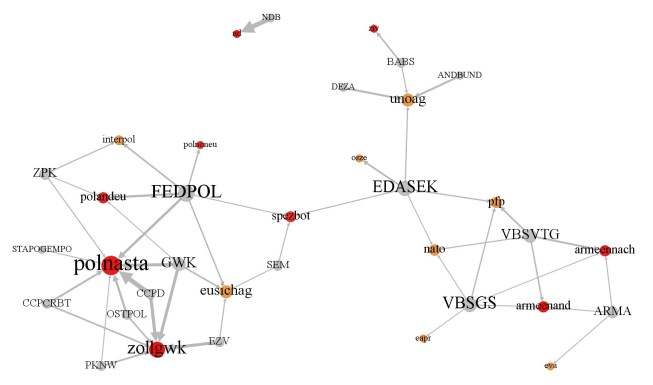
Hagmann, Jonas; Davidshofer, Stephan; Tawfik, Amal; Wenger, Andreas; Wildi, Lisa (2018). The programmatic and institutional (re-)configuration of the Swiss national security field. Swiss Political Science Review 24(3): 215-245. PDF / Score tables / OpenAccess URL
La sécurité suisse: entre neutralité et impératif de coopération
 Depuis la naissance de la Suisse moderne en 1848, sécurité a constamment rimé avec neutralité. De nos jours, cette dernière reste encore perçue par une large majorité de Suisses comme une garantie de protection face aux tumultes du monde. Cependant, dans la pratique, cette singularité est remise en question. L’article démontre que dans un monde interdépendant, l’impératif de coopération, indispensable pour gérer les menaces avant tout globales et transnationales, s’accompagne d’une discrète mais profonde transformation du paysage sécuritaire d’un pays situé au cœur de l’Europe.
Davidshofer, Stephan; Tawfik, Amal; Hagmann, Jonas (2017). La sécurité suisse: entre neutralité et impératif de coopération. Questions internationales 87 (2017/5): 25-29. PDF
Das Schweizer Sicherheitsfeld unter der Lupe: Bedrohungsarbeit, landesweite und internationale Vernetzung der eidgenössischen und kantonalen Sicherheitsbehörden
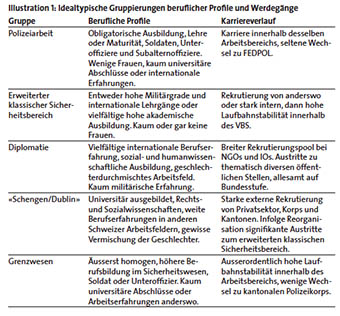
Wer arbeitet heute mit wem und wie intensiv zu welchen Gefahren? Basierend auf einer umfassenden und einzigartigen, umfassenden Datenerhebung kartiert dieser Beitrag die Entwicklung des gesamtschweizerischen Sicherheitsbereichs. Die Darstellung der praktischen Arbeitsteilungen, der inneren und der äusseren Kooperationen, sowie der beruflichen Profile und Werdegänge von Sicherheitspraktikern schafft einen analytisch differenzierten und empirisch fundierten Beitrag zu den anhaltenden Diskussionen über die landesweite sicherheitspolitische Steuerung. So zeigt das Kapitel, wie Sorgen um Migration und Terrorismus nunmehr das Sicherheitsfeld integrieren und das nationale Sicherheitsfeld hierarchisch in anleitende und Service-orientierte Behörden strukturiert, aber auch wie sich die internationale Sicherheitszusammenarbeit zu einer regierungsstufenübergreifenden Praxis wandelte und sich die beruflichen Werdegänge der einzelnen Unterbereiche nun langsam vermischen.
Hagmann, Jonas; Wenger, Andreas; Wildi, Lisa; Davidshofer, Stephan; Tawfik, Amal (2016). Schweizer Sicherheitspolitik in der Praxis: Eine empirische Momentaufnahme. In Nünlist, Christian; Thränert, Oliver (eds.). Bulletin zur Schweizer Sicherheitspolitik, pp99-134. Zürich: Center for Security Studies, ETH Zürich. PDF
Wie wird man Polizist? Die Entwicklung und Professionalisierung der Polizeiausbildung in der Schweiz
 Die Aus- und Weiterbildung der Polizei hat sich in den letzten fünfzehn Jahren stark gewandelt. Bildungsstätten wurden fusioniert oder neu geschaffen. Ein nationaler Rahmenlehrplan wurde erstellt und der Berufsabschluss «Polizistin/Polizist» erstmals eidgenössisch anerkannt. Gleichzeitig wurden die Lehrinhalte auf das Erlangen umfassender, spezialisierter Handlungskompetenzen für einen zunehmend komplexen und vernetzten Arbeitsbereich ausgerichtet. Dieses Kapitel zeichnet die Geschichte und die jüngsten Entwicklungen der Schweizer Polizeiausbildung nach. Es zeigt auf, dass trotz Harmonisierung und Professionalisierung regionale Unterschiede und bildungspolitische Herausforderungen fortbestehen.
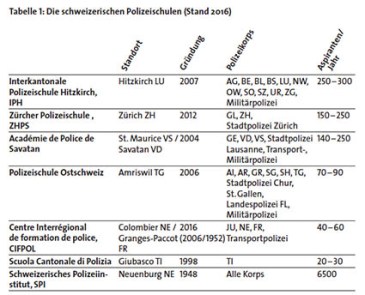
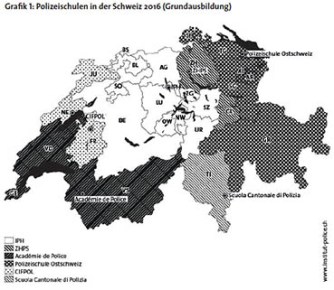
Wildi, Lisa; Hagmann, Jonas (2016). Vom Landjäger zum modernen Ordnungshüter: Die Polizeiausbildung in der Schweiz. In Nünlist, Christian; Thränert, Oliver (eds.). Bulletin zur Schweizer Sicherheitspolitik, pp71-97. Zürich: Center for Security Studies, ETH Zürich. PDF
The professional field of Swiss national security: Towards a hypertrophy of internal security – and some methodological remarks
 The emergence of a transnational field of security in Europe constitutes a stimulating new observation to security studies research. However, the operationalization of such research is challenging. Notably, time-consuming data collection and data analysis is required to fully comprehend the complex characteristics and resources of a security field’s manifold actors. Drawing on a research project funded by the Swiss National Science Foundation (SNSF), this article offers a substantive analysis of the contemporary dynamics of the Swiss national security field, and it presents some practical ‘tools’ for researchers interested in producing empirical studies of transnational fields of security in Europe. To do so, the article mobilises multiple correspondence analysis, principal component analysis, network analysis and other statistical or statistics-based methods to assess the europeanisation of the Swiss security field.
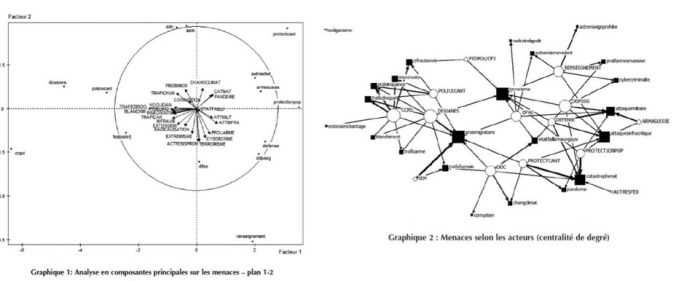
Davidshofer, Stephan; Tawfik, Amal; Hagmann, Jonas (2016). Analyse du champ de la sécurité en Suisse : vers une hypertrophie de la sécurité intérieure et autres réflexions méthodologiques. Cultures & Conflits 102 (2016/2): 59-93. PDF
Wer “weiss” nationale (Un-)Sicherheit? Die Schweizer Sicherheitspolitik als verwaltungszentriertes Politikfeld
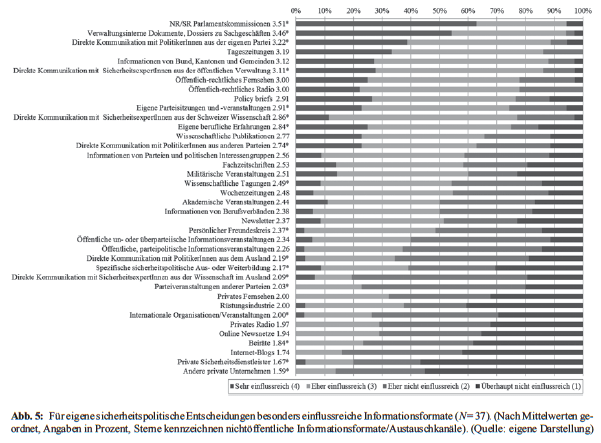
 Wie alle Politikobjekte müssen auch sicherheitspolitische Belange gedeutet werden. Doch wessen Ansicht und Wissen über Sicherheitspolitik ist tonangebend? Basierend auf einer Befragung amtierender PolitikerInnen erfasst dieser Beitrag die sicherheitspolitischen Wissensaustauschpraktiken in der Schweiz. Er zeigt dabei, dass der Schweizer Sicherheitsbereich zwar kein geschlossenes Wissenstransfersystem darstellt. Doch die Resultate suggerieren auch, dass der eidgenössische Sicherheitsbereich von verwaltungsorientierten, nationalen und geschlossenen Wissenstransfermechanismen dominiert wird. Als erste empirische Auslegeordnung des Wissenstransfers im Sicherheitsbereich überhaupt arbeitet der Beitrag der vergleichenden Untersuchung nationaler Sicherheitskulturen zu und hinterfragt, wessen Wissen wie in der Sicherheitspolitik Gehör findet.
Hagmann, Jonas; Szvircsev Tresch, Tibor (2013). Der Staat weiss es am besten? Die Schweizer Sicherheitspolitik als verwaltungszentriertes Politikfeld. Zeitschrift für Aussen- und Sicherheitspolitik 6(2): 199-223. PDF
National risk registers: The measurement, comparison and ranking of all kinds of danger
 European civil protection agencies have become highly active in measuring, comparing and ranking all kinds of public danger, ranging from natural hazards to industrial risks and political perils. This article focuses on this production of integrated ‘national risk registers’ and the analytical power politics in which they are complicit. It argues, first, that by positing ‘science’ as an objective determinant of security truth, the registers advance modernist understandings of how knowledge about danger can be arrived at – thus discounting both ‘sovereign’ and popular authorities. Second, it shows that by operationalizing traditional risk-assessment formulas, risk registers empower seemingly apolitical decisions in security affairs, taken on the basis of cost–benefit thinking. Third, it discusses how risk registers’ focus on ‘themes’ tiptoes around the definition of referent objects, thus avoiding explicit decisions about beneficiaries of particular security decisions. Taking these factors into account, the article finds the new risk registers to depoliticize national security debates – while transforming insecurity into something permanent and inevitable.
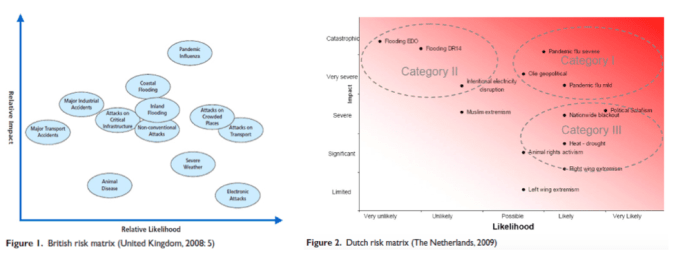
Hagmann, Jonas; Dunn Cavelty, Myriam (2012). National risk registers: Security scientism and the propagation of permanent insecurity. Security Dialogue 43(1): 79-96. PDF
Die Schweizer Sicherheitspolitik zwischen Politik und Expertise
 Wie und wo wird sicherheitspolitisches Fachwissen in den Politikbereich eingebracht? Wie und bei wem informieren sich Schweizer Politiker über sicherheitspolitische Belange? Basierend auf Fragebogendaten umschreibt und analysiert der vorliegende Beitrag aktuelle Praktiken der Wissensbeschaffung und Wissensbereitstellung im Bereich der Schweizer Sicherheitspolitik systematisch. Er zeigt dabei, dass Schweizer Sicherheitspolitiker sich einer Vielzahl von Informationsquellen bedienen, geschlossene Austauschkanäle jedoch klar bevorzugen und akademische, private und internationale Quellen vernachlässigen. Gleichzeitig beschreibt der Beitrag, wie die Bundesverwaltung eine Drehscheibenfunktion in der Bereitstellung und Vermittlung sicherheitspolitischen Wissens einnimmt. Mit seiner Auslegung des Wissenstransfers im Bereich der nationalen Sicherheit der Schweiz liefert der Beitrag eine empirische Grundlage, um das Zusammenspiel von Experten und Politikern zu diskutieren.
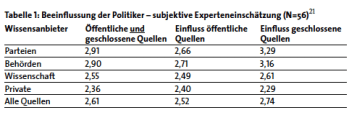
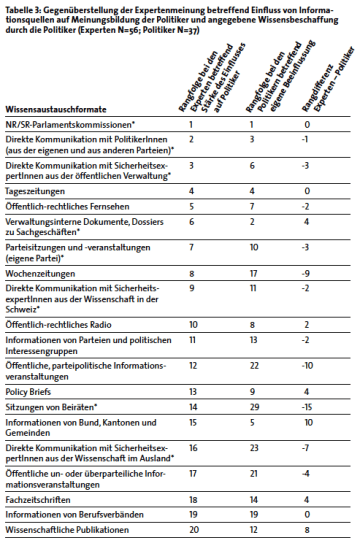
Hagmann, Jonas; Szvircsev Tresch, Tibor (2012). Die Schweizer Sicherheitspolitik zwischen Politik und Expertise. In Wenger, Andreas; Trachsler, Daniel (eds.). Bulletin zur Schweizer Sicherheitspolitik, pp39-68. Zürich: Center for Security Studies, ETH Zürich. PDF
Sicherheitspolitische Konzeptionen (und Projektionen) nationaler Experten
 Was sind die sicherheitspolitischen Herausforderungen für die Schweiz von heute? Anhand von Umfrageresultaten zeigt der hier vorliegende Beitrag, wie verschiedene nationale Expertengruppierungen den aktuellen Sicherheitskontext unterschiedlich charakterisieren und welche Schlussfolgerungen sie daraus für die Aussenpolitik ziehen. Gleichfalls zeigt er auf, dass sicherheitspolitische Vorstellungen einzelner Experten von der Kompetenzgemeinschaft unterschiedlich gewertet werden. Damit wird die Integration unterschiedlicher Meinungsbilder und die Zusammenführung verschieden “kompetenter” Akteure zu anspruchsvollen Herausforderungen des sicherheitspolitischen Gestaltungsprozesses.
Hagmann, Jonas (2009). Sicherheitspolitische Konzeptionen und Projektionen nationaler Experten. Military Power Revue 2(3): 28-41. PDF
Private actors as objects of national and international security governance
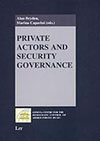 The international regulation of non-state security providers centers on two debates. On one hand, there is the discussion whether private agents allow for an effective provision of security. Drawing on the idea of global governance, the thrust of the argument is that decentralized regulation and provision of security provides superior effectiveness to centralized, government-sponsored approaches. This debate highlights that the security sector has been transformed into a non-centralised collective of security providers comprising a multitude of different actors with non-hierarchical relationships in many regions of the world. On another hand, there is an on-going debate about the means by which such non-state security providers can or should be held accountable to international humanitarian law, international human rights law especially. With their traditional focus on states, these legal frameworks often fail to address non-state actors. Both of these discussions accept the notion of security governance. Yet in so doing, both fail to address the important issue of democratic control and oversight.
Hagmann, Jonas; Kartas, Moncef (2006). International organisations and the governance of private security. In Bryden, Alan; Caparini, Marina (eds.). Private Actors and Security Governance, pp285-304. Münster: LIT Verlag. PDF
 :: Jonas Hagmann ::